
Games and activities
12 math games for kids at home, with no worksheets
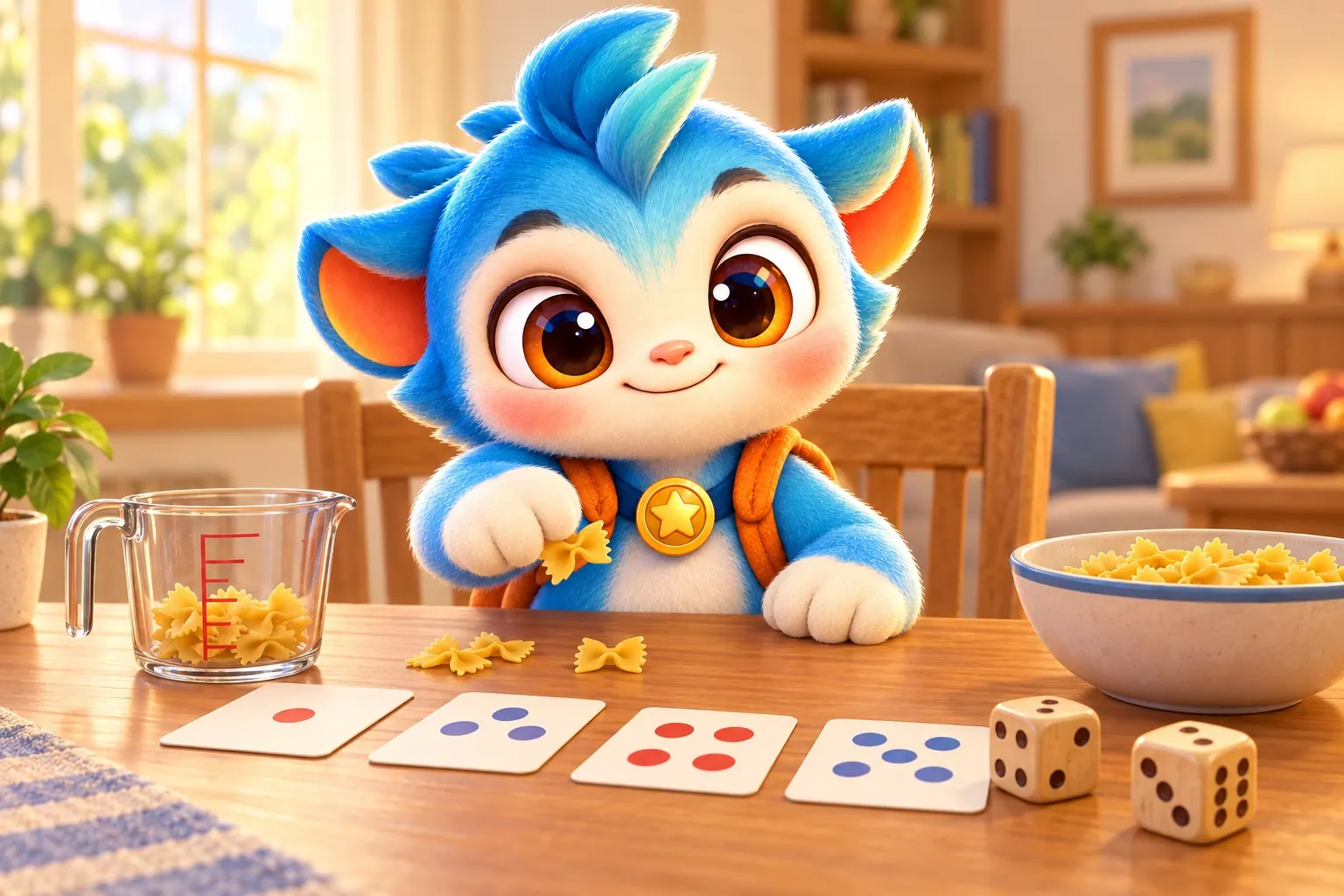
In this guide
- Which card games teach math?
- How can I use dice for math?
- How do I do math in the kitchen?
- How can we practice math on a walk?
- What do I need to have on hand?
- What could a week of games look like?
- Which game for which age?
- How do I make a game easier or harder?
- Can the games help with school math?
- How do I keep games calm and short?
- Which free online games can we try next?
- Quick answers
You can play math games at home with a deck of cards, a pair of dice, snacks and a walk around the block. No worksheets and no printing. Below are twelve games for ages 4 to 8, grouped by what you need, with notes on how to make each one easier or harder.
An IES practice guide for early math recommends teaching children to view and describe their world mathematically and giving math some time each day. One of its suggestions for that daily time is games that practice math skills.
Which card games teach math?
Take a regular deck and remove the face cards. Aces count as 1.
- War, bigger number wins. Each player flips a card. The higher number takes both cards. This practices comparing written numbers, one of the US kindergarten standards. Younger children can compare by counting the symbols on the cards, or by laying two cards side by side and matching them one to one.
- Make ten. Lay out 12 cards face up. Take turns picking two cards that add to 10 (4 and 6, 3 and 7). Start with a smaller target, such as 5, for younger children. Our guide to number bonds to 10 explains the pairs.
- Memory pairs. Turn 12 cards face down, two of each number. Find the matching numbers. Say the number out loud on every flip.
- Order the cards. Deal 5 cards and put them in order from smallest to largest. Add a sixth and ask where it goes.
Our guide to math card games has seven more, each with rules for ties and for when the game ends.
How can I use dice for math?
- Roll and cover. Draw a row of numbers 1 to 6 on paper. Roll a die and cover that number with a button. The goal is to cover all six. Over several rounds, watch whether your child starts to know the dot patterns without counting each dot.
- Race to 20. Each player rolls a die and puts that many blocks in a tower. Count the tower aloud. The first to reach 20 wins; stop at exactly 20 or a little over, whichever you agree.
- Two dice, add them. Roll two dice and say the total. Your child can count all the dots, or count on from the bigger die, which is the step to practice when learning to add.
Dice also drive board games. Our guide to math board games suggests what to play at each age, from a simple number track to Shut the Box.
How do I do math in the kitchen?
- Setting the table. Ask for one fork for each person, then one spoon, then count how many in all. The US kindergarten standards ask children to count out a given number of objects, and the table gives you a reason to.
- Snack split. Put 8 crackers on a plate. Ask “Can we share them so each of us gets the same?” Try 2 people, then 4. Talk about leftovers if there are any. For taking away, “You eat 2. How many are left?”
How can we practice math on a walk?
- Count and spot. On a walk, count the steps to the corner, or the red doors. Ask “How many do you think there are before we count?”
- Shape hunt. Look for circles, rectangles and triangles in signs, windows and wheels. Use position words: “The sign is above the door.”
- Jump and count back. Stand at a crack in the sidewalk and take 5 jumps, then jump back 2 and ask where you are. This is taking away on a number line without any paper.
What do I need to have on hand?
Almost nothing. A deck of cards, one or two dice, a handful of buttons or blocks, a pencil and some paper cover all twelve games. For the kitchen games, use the food you already have. Keep small items such as buttons away from children who still put things in their mouths, and use larger blocks or dry cereal for them.
What could a week of games look like?
Monday: memory pairs for 10 minutes while dinner cooks. Tuesday: set the table together and count the forks. Wednesday: roll and cover. Thursday: a walk with a shape hunt. Friday: make ten with the cards, then one online game. Nothing here is a schedule to keep. Skip a day and pick up where you left off.
Which game for which age?
Ages 4 to 5: the order cards game, memory pairs with numbers 1 to 5, setting the table, snack split with 4 to 6 crackers, and the count and spot walk. Keep numbers to 10 or below.
Ages 5 to 6: war, make ten, roll and cover, two dice, and jump and count back. These match what US kindergarten covers: comparing groups, adding and subtracting within 10, and making 10.
Ages 6 to 8: race to 20 with a bigger target (50 or 100), make ten with the target set to 20, and two dice with a third die added. Shut the Box, in the online games below, fits this age too.
How do I make a game easier or harder?
Make it easier by using fewer cards, smaller numbers, or real objects to count. Make it harder by raising the target, adding a third die, or asking “How do you know?” after a turn. None of these games needs a timer, which leaves time to talk about how an answer was found.
Can the games help with school math?
They touch the same ideas. Counting objects, counting in order, comparing groups and making 10 all appear in the US kindergarten standards. Because the games use cards, dice and food, your child meets those ideas with things they can hold, which fits the standards’ own list of ways to show adding and taking away: objects, fingers, drawings and acting out, as well as equations. The Common Core FAQ gives a kindergarten example: a game with other children that builds adding and subtracting suits that age, while half an hour alone with worksheets does not. If your child is ready for the next step, the page on Kindergarten math lists what a school year usually covers.
How do I keep games calm and short?
- Begin with numbers your child already counts, so the first round is a win.
- Keep sessions to 5 to 10 minutes.
- If your child makes a mistake, count together and check.
- Let them be the dealer or the roller. Explaining the rules to you is good practice too.
Which free online games can we try next?
All our free math games run in the browser. A few that match the games above:
- Count and Tap: counting objects one at a time.
- Make Ten Match: finding pairs that add to 10.
- Shut the Box: the classic dice and numbers game.
- Sum Rockets: addition sums, no timer.
They are meant for sitting beside your child. For what each age is working on, see Kindergarten math. To browse more by grade, try the free preschool math games and kindergarten math games.
Quick answers
How long should a math game at home last?
Five to ten minutes is plenty for a 4- to 6-year-old. Stop while your child still wants more, and play again tomorrow.
What age are these games for?
Most suit ages 4 to 8. Use smaller numbers with younger children (up to 5 or 10) and larger ones as they get confident.
Should I correct mistakes during a game?
Count together instead of saying 'wrong'. If a child says 4 and there are 5, say 'Let's check' and touch each item once.
Are online games okay?
Short sessions with a parent nearby work well. Our free browser games have no timer and no ads. Use them alongside play with real objects.
Related

Count and Tap
Tap each bug once to count it, then say how many.
- Ages 3–6
- Counting to 20
- One-to-one counting
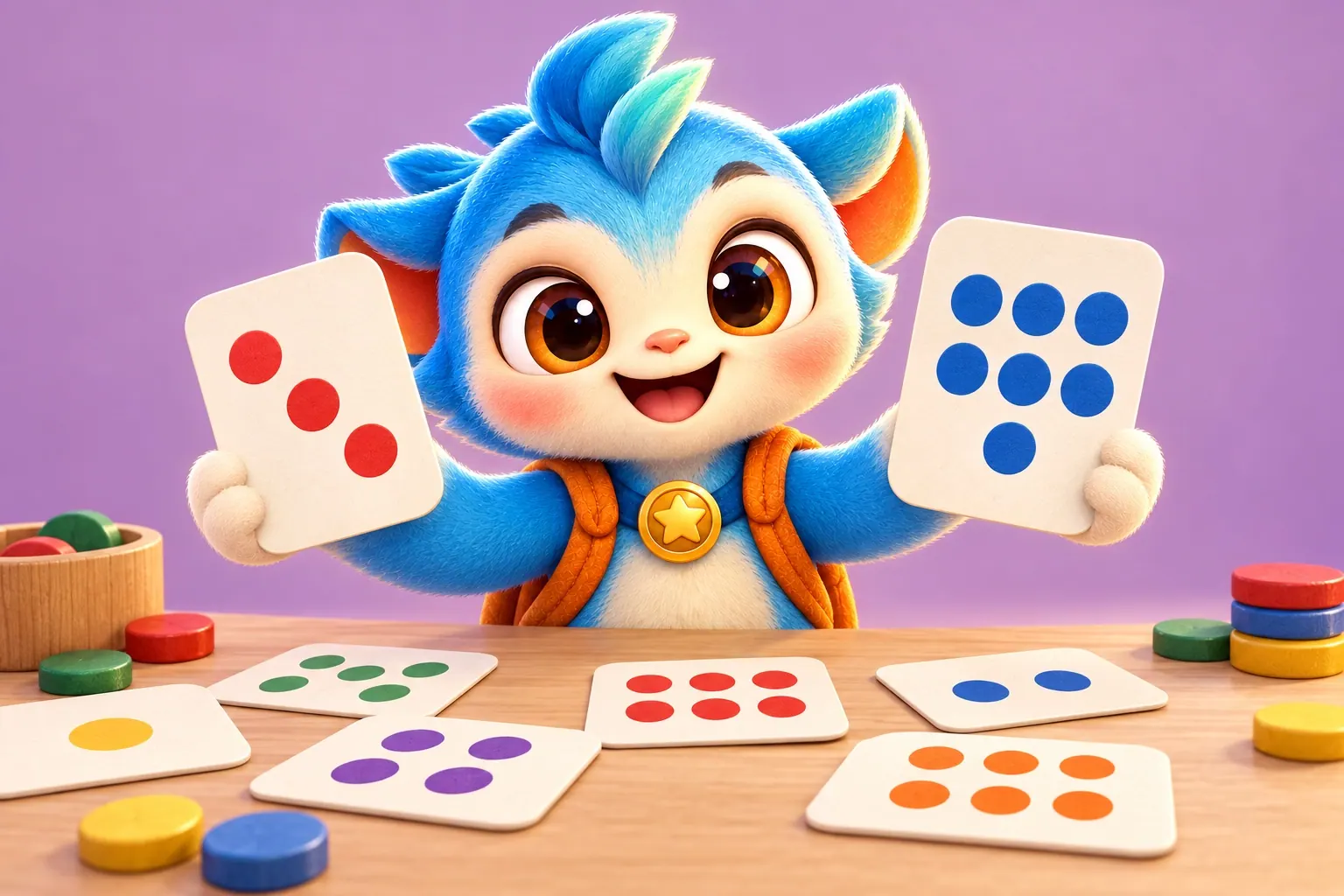
Make Ten Match
Find two cards that add up to 10 and match them.
- Ages 5–7
- Pairs that make 10
- Bonds to 5 and 20
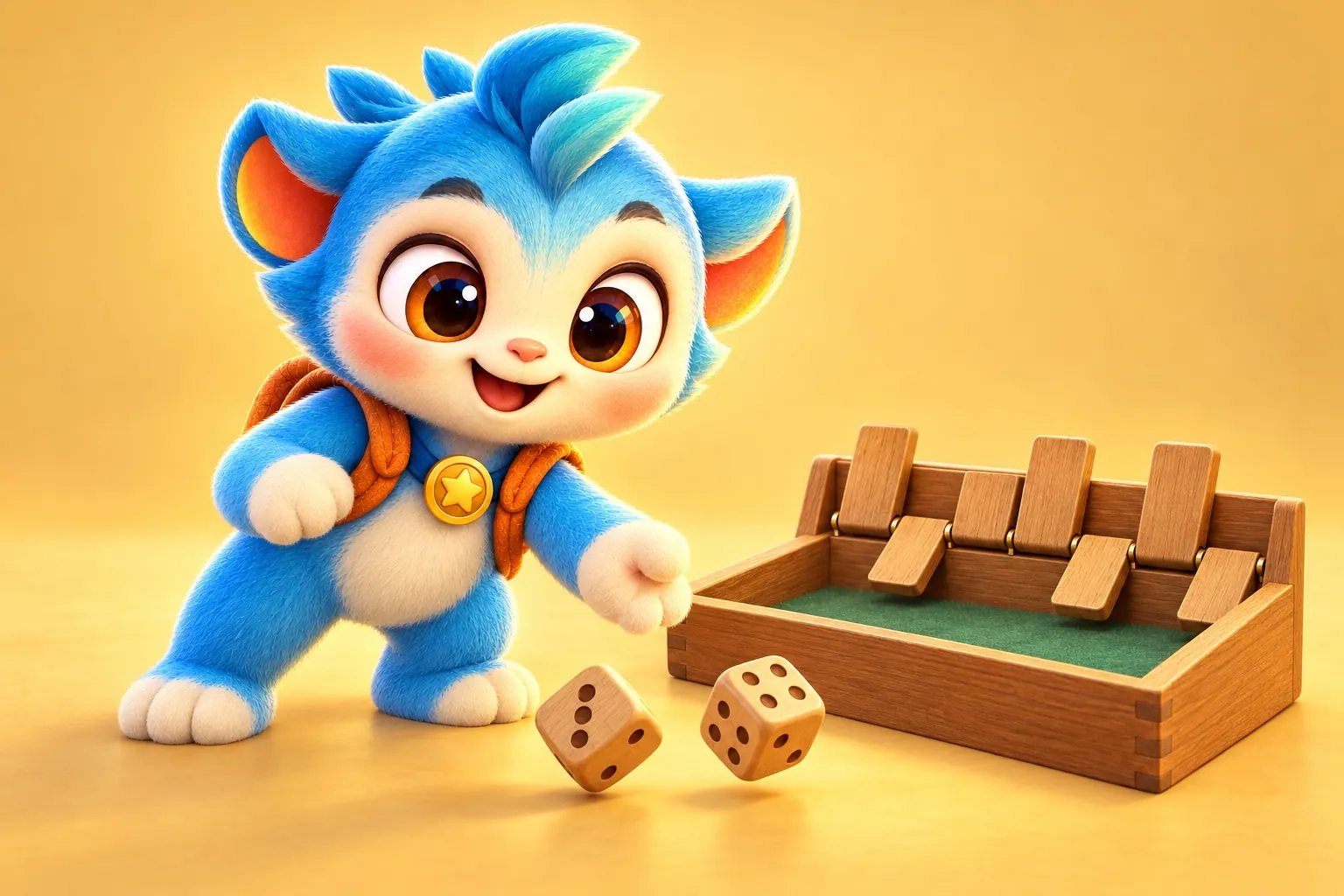
Shut the Box
Roll the dice, then close tiles that add up to the roll. Can you close them all?
- Ages 5–8
- Addition within 12
- Number bonds

Sum Rockets
Give each rocket the right fuel number and light up the sky.
- Ages 5–7
- Addition facts to 10 and 20
- Counting on
Sources
- Teaching Math to Young Children (practice guide), US Institute of Education Sciences, What Works Clearinghouse. ies.ed.gov
- Common Core State Standards for Mathematics: Kindergarten, Counting and Cardinality, National Governors Association Center for Best Practices and Council of Chief State School Officers. www.thecorestandards.org
- Common Core State Standards for Mathematics: Kindergarten, Operations and Algebraic Thinking, National Governors Association Center for Best Practices and Council of Chief State School Officers. www.thecorestandards.org
- Common Core State Standards: Frequently Asked Questions, Common Core State Standards Initiative website (unofficial). www.thecorestandards.org
Keep reading
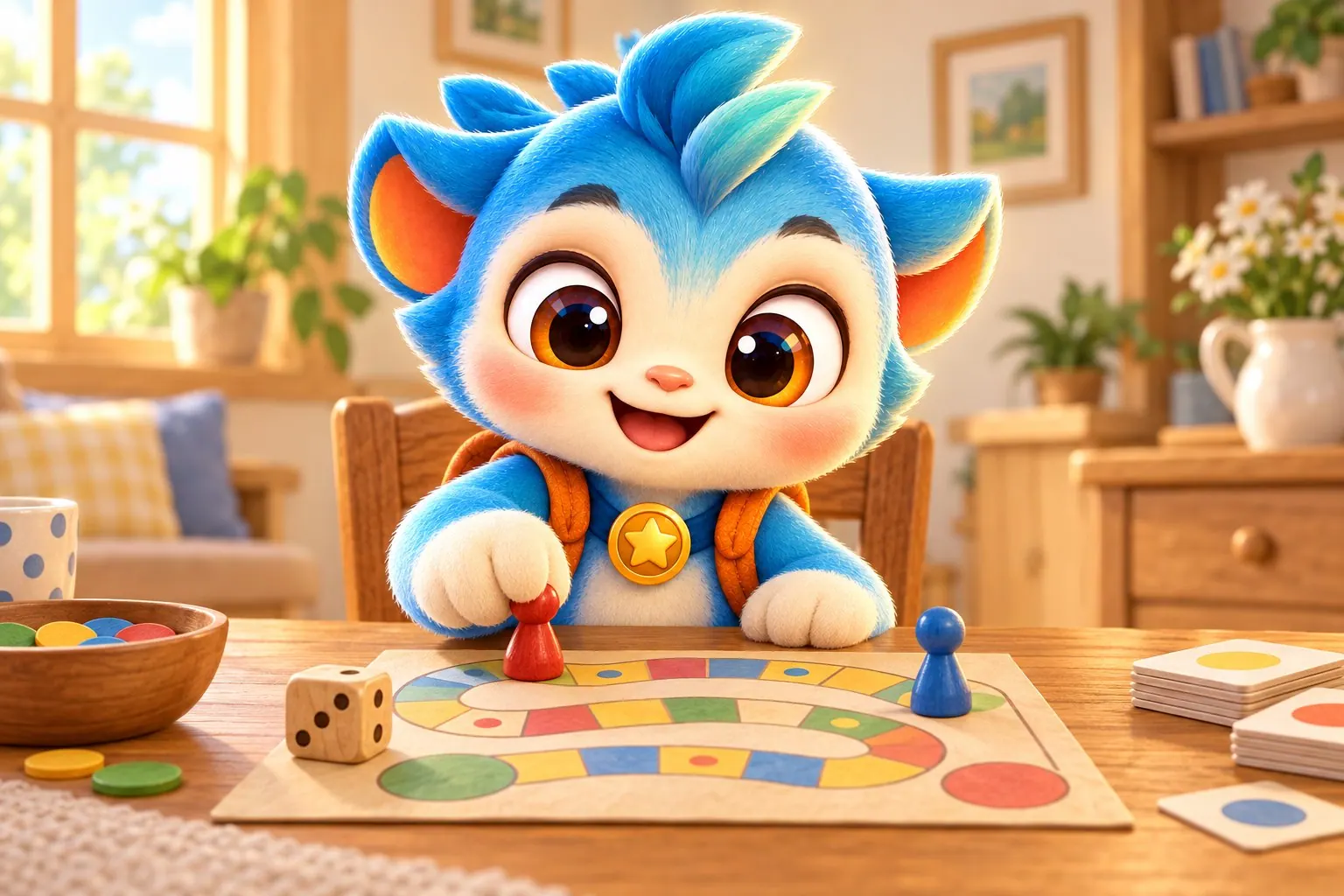
Math board games for kids: what to play at ages 3 to 8
Math board games for kids, by age: race tracks, dominoes, sowing games, Shut the Box and dice games, plus how to make your own number track at home.
Math card games for kids: 7 games with one ordinary deck
Seven math card games for kids that use one regular deck. Short rules, an age for each game, and the math each one practices, from number order to making ten.

How to teach addition: from counting all to making ten
How to teach addition to kids in order: counting all, counting on, doubles, making ten, then fluency through play instead of timed drills.