
Teaching math
Number bonds to 10: what they are and 7 ways to practice
In this guide
A number bond is a pair of numbers that add up to a total. The number bonds to 10 are 0 and 10, 1 and 9, 2 and 8, 3 and 7, 4 and 6, and 5 and 5. Children learn them by splitting 10 objects into two groups, again and again, until each pair feels familiar.
What are number bonds?
Number bonds are pairs of numbers that make a total. Take 10 buttons and push them into two piles. If one pile has 3, the other has 7. That is a number bond: 3 and 7 are two parts, and 10 is the whole. Move one button across and you get 4 and 6, another bond for the same whole.
In the United States you may hear “making ten” or “ways to make 10” for the same idea, and “fact families” for the addition and subtraction facts that come from one bond. “Number bonds” is the usual term in the UK. The US Common Core kindergarten standards ask children to “decompose numbers less than or equal to 10 into pairs in more than one way, e.g., by using objects or drawings,” and to record each split with a drawing or an equation such as 5 = 2 + 3 and 5 = 4 + 1.
Why does making 10 matter?
Our number system is built on tens, so 10 is a landmark. The same kindergarten standards ask children to “find the number that makes 10 when added to the given number” for any number from 1 to 9.
Making ten also helps with bigger sums. The Grade 1 standards give an example of the method: 8 + 6 = 8 + 2 + 4 = 10 + 4 = 14. The child splits the 6 into 2 and 4, uses the 2 to fill up to 10, and adds the rest. That only works smoothly when 8 and 2 are known as a pair. Our guide to how to teach addition shows where this method sits among the others.
The IES practice guide on teaching math to young children recommends teaching number and operations “using a developmental progression,” a sequence in which each skill prepares the next. In the US standards, bonds to 10 sit in the middle of such a sequence: counting comes first, making ten comes in kindergarten, and adding within 20 follows in first grade.
How do I practice number bonds at home?
Use objects first, then pictures, then numbers. Each idea below takes a few minutes. A free ten frame on a screen works well for the picture step.
- Two piles of 10. Give your child 10 small objects, such as buttons, pasta shells or coins. Ask for two piles. Say the bond aloud: “Six and four make ten.” Ask for a different pair and find them all.
- A ten frame. Draw a box with two rows of five squares. Put 7 counters in it. Ask “How many empty squares?” The answer, 3, is the partner of 7. Fill the frame with two colors to see the split.
- Fingers. Hold up all ten fingers and fold some down: “I fold down 4. How many are standing?” Fingers are a fine tool at this age, and the standards list them among the ways to represent addition and subtraction.
- Hidden counters. Show 10 counters. Cover some with a cup while your child looks away. Show the rest and ask how many are under the cup.
- Towers. Build a 10-block tower in one color. Break it into two towers of different colors and count each. Snap it back together.
- Missing part. Say “7 and what make 10?” Let your child use objects to find the answer, then drop the objects once it is easy.
- Match the pair. Lay out cards or sticky notes from 0 to 10 and match two that make 10.
Keep sessions short, a few minutes at snack time or in the car. If a pair is stuck, go back to objects. Knowing a pair without working it out comes from many small, calm tries.
A few small habits make these activities work better:
- Say the whole bond aloud each time, “seven and three make ten,” so the words go with what the child sees.
- Swap the order. “Seven and three” and “three and seven” are the same bond, and building both with objects shows why. The Grade 1 standards use this idea: if 8 + 3 = 11 is known, then 3 + 8 = 11 is also known.
- Start with 5 and 5, one full hand each, or with 1 and 9, which nearly fills a ten frame. Then add the other pairs one at a time.
- Stop while your child still wants to play.
Which games help with number bonds?
Three free games on this site practice the same idea:
- Number Bonds: join touching tiles so they add up to the target, which can be 5, 10 or 20.
- Make Ten Match: find two cards that make 10, such as 3 and 7.
- Shut the Box: roll the dice, then close tiles that add up to the roll. It makes children split numbers in several ways.
Sit beside your child and say the pairs aloud as they play. The Kindergarten curriculum page shows where making 10 fits among the other kindergarten topics. More free kindergarten math games and first grade math games are on their own pages.
The dice or cards from any board game will do at home. Roll one die and ask what goes with it to make 10.
Can I write the bonds down?
Yes, once the objects are easy. Write 10 at the top of a page and draw two boxes under it. Fill the boxes with a drawing of the split and then with numbers: 6 in one box, 4 in the other. Later, change it to an equation, 6 + 4 = 10. The kindergarten standards ask children to record each split “by a drawing or equation,” so a drawing counts as much as an equation. Let your child choose the pair, and you check it with counters.
What comes after bonds to 10?
Next come the bonds to 20, and subtraction facts that use the same pairs: if 3 and 7 make 10, then 10 - 3 = 7. The Grade 1 standards ask children to “add and subtract within 20, demonstrating fluency for addition and subtraction within 10.” Fluency here means knowing a fact without a long count, and the seven ideas above are one way to get there over many weeks. If counting is still shaky, our guide on how to teach a child to count is the place to start.
If your child finds these pairs very hard after many weeks of calm practice, talk to their teacher.
Quick answers
What is the difference between number bonds and fact families?
Number bonds are pairs of numbers that make a total, like 4 and 6 for 10. A fact family is the set of addition and subtraction facts that use the same three numbers: 4 + 6 = 10, 6 + 4 = 10, 10 - 4 = 6 and 10 - 6 = 4. Bonds are the starting point for the family.
Does my child have to memorize the bonds to 10?
The goal is to know them without working them out, which comes from many small experiences with objects and games. Start by building each pair with counters and let the recall follow. Timed tests are not needed.
Are number bonds taught in the US?
The term is more common in the UK. US kindergarten standards ask for the same idea: finding the number that makes 10 when added to any number from 1 to 9. In US classrooms you may hear it called making ten.
What are the number bonds to 10?
The pairs are 0 and 10, 1 and 9, 2 and 8, 3 and 7, 4 and 6, and 5 and 5. Each pair also works in the other order, so 7 and 3 counts as well.
Related

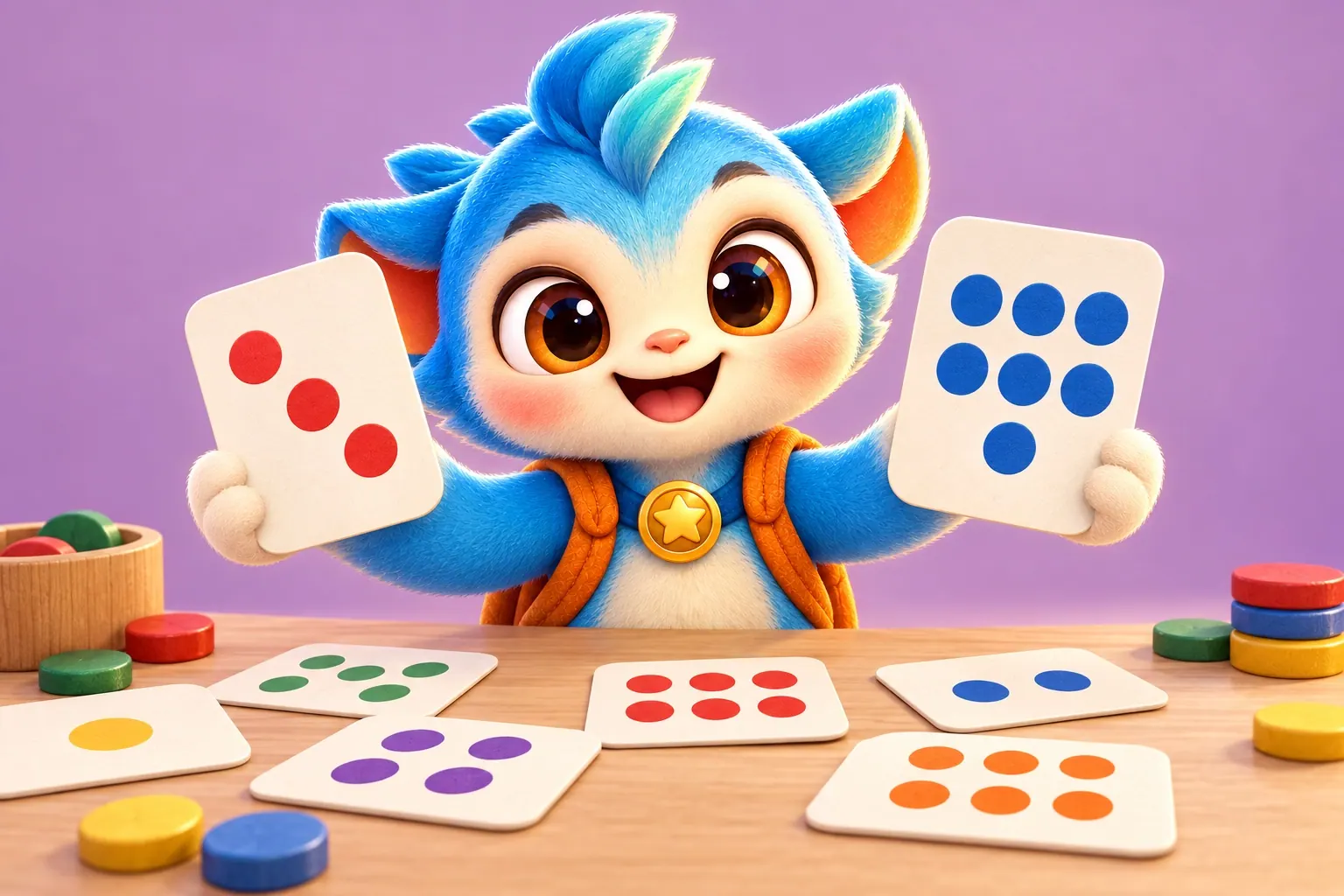
Make Ten Match
Find two cards that add up to 10 and match them.
- Ages 5–7
- Pairs that make 10
- Bonds to 5 and 20
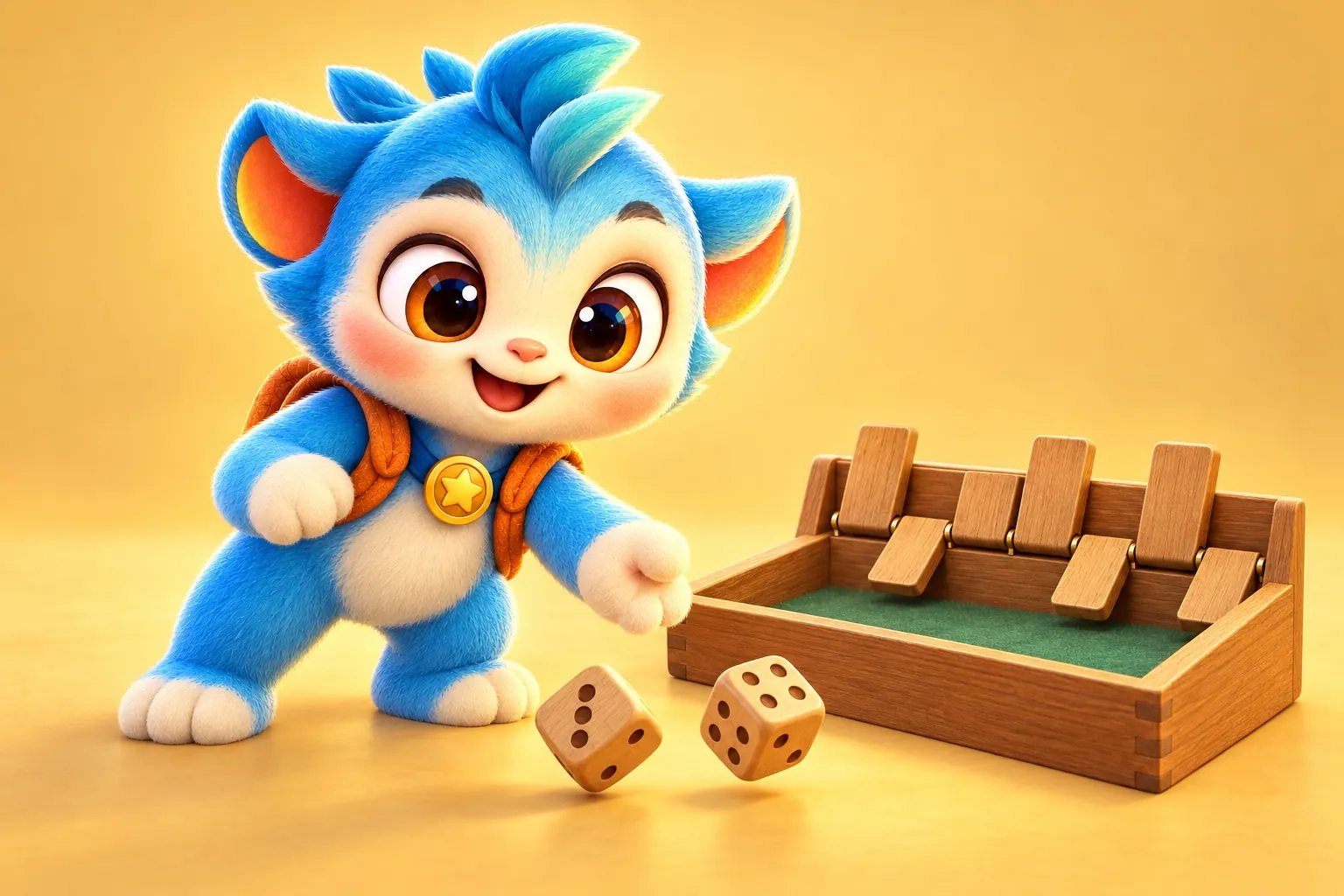
Shut the Box
Roll the dice, then close tiles that add up to the roll. Can you close them all?
- Ages 5–8
- Addition within 12
- Number bonds
Sources
- Common Core State Standards for Mathematics, Kindergarten: Operations and Algebraic Thinking (K.OA), National Governors Association Center for Best Practices and Council of Chief State School Officers. www.thecorestandards.org
- Common Core State Standards for Mathematics, Grade 1: Operations and Algebraic Thinking (1.OA), National Governors Association Center for Best Practices and Council of Chief State School Officers. www.thecorestandards.org
- Teaching Math to Young Children (practice guide), US Institute of Education Sciences, What Works Clearinghouse. ies.ed.gov
Keep reading
How to teach addition: from counting all to making ten
How to teach addition to kids in order: counting all, counting on, doubles, making ten, then fluency through play instead of timed drills.
Fact family in math: what it means and how to teach it at home
A fact family is the set of addition and subtraction facts that use the same three numbers. See fact triangles, examples and how they make subtraction easier.

Greater than less than: how to teach the symbols to kids
Greater than, less than and equal to start with comparing objects. Steps for teaching the > and < symbols, and what the alligator trick can and can't do.