

Make Ten Match
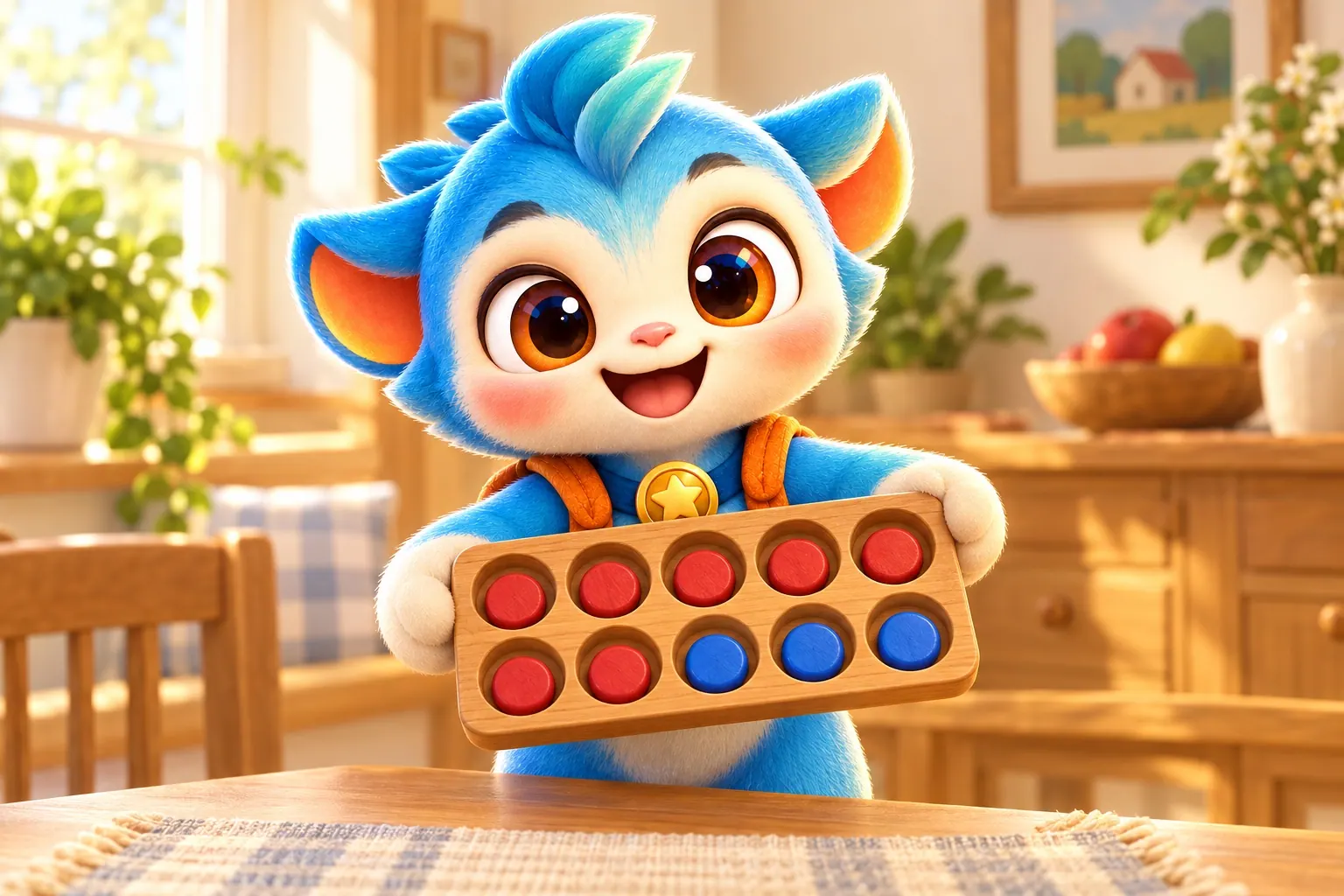
Find two cards that add up to 10 and match them.
- Ages 5–7
- Pairs that make 10
- Bonds to 5 and 20
This free ten frame has room for ten counters in two rows of five. Tap a square to add a counter in blue or gold, so 7 can show as 5 and 2. Press Show how many to see the total and how many more make 10. Switch to two frames for numbers up to 20.
Tap a square to add a counter in blue or gold, so 7 can show as 5 and 2. Press Show how many to see the total and how many more make 10. Switch to two frames for numbers up to 20.
A ten frame is a grid of two rows of five squares. Counters go in one at a time, usually filling the top row first, so children can see a number as a part of ten. Seven is a full row of five and two more, and it is three short of ten.
A double ten frame puts two frames side by side. It helps with numbers from 11 to 20: a full frame of ten and some more. Using two colors lets children see the parts of a number, which is the idea behind number bonds.
Common Core standards that fit this tool, in the standards' own words:
Find two cards that add up to 10 and match them.


Tap each bug once to count it, then say how many.
Ideas for using the ten frame and talking about math away from the screen.
Number bonds to 10 are the pairs that make 10, like 3 and 7. See what they are, why making ten matters, and seven ways to practice at home.
A fact family is the set of addition and subtraction facts that use the same three numbers. See fact triangles, examples and how they make subtraction easier.

How to teach addition to kids in order: counting all, counting on, doubles, making ten, then fluency through play instead of timed drills.
Color numbers on a 1–100 or 1–120 grid and see the patterns in counting by 2s, 5s and 10s.
Drop a marker on a line from 0 to 10, 20 or 100, or draw hops to add and take away.
Watch the real time on a big clock face, or turn the hands to set any time.
A ten frame is used to see numbers as parts of ten. Children place counters in a grid of two rows of five, so they can tell at a glance how many there are and how many more make 10. Teachers use it a lot for number bonds to 10.
A double ten frame is two ten frames side by side, for numbers from 11 to 20. A full frame of 10 sits next to a second frame with the extra counters, so 14 is seen as 10 and 4. Choose Two frames to use it here.
Two colors show the parts of a number. Five blue and two gold counters make 7, and the empty squares show the 3 that are still needed for 10. Trying other splits shows that one number can be made in several ways.
Ten frames suit ages 4 to 7. Preschoolers count and match counters to squares, kindergartners find the number that makes 10, and first graders use ten frames to add and subtract within 20.