
Teaching math
How to teach addition: from counting all to making ten
In this guide
Teach addition in stages, using these addition strategies in order: counting all, counting on, doubles, and making ten. Start with objects and stories. Fluency, which means answering accurately without a long count, builds up over many short practices. Short games work well, and timed drills are not needed.
Where should addition start?
With things a child can hold. The US kindergarten standards ask children to “represent addition and subtraction with objects, fingers, mental images, drawings, sounds (e.g., claps), acting out situations, verbal explanations, expressions, or equations.” Equations are only one item on that list.
Begin with a story: “You have 3 crackers and I give you 2 more.” Let your child act it out with real crackers or toys, push the groups together and say what happened. The standards also ask children to solve word problems “by using objects or drawings to represent the problem.” If your child is not yet counting objects reliably, start with our guide on how to teach a child to count.
A note on words: say “and” and “makes” while you work, and let the symbols come later. “Three and two makes five” is plain, and it connects to the plus and equals signs when you write them.
How does counting all work?
Counting all is the place to start. To find 3 + 2, count 3 objects, count 2 more, then count all of them from one: “1, 2, 3, 4, 5.”
Put 3 spoons in one cup and 2 in another. Tip both onto the table and count. Do this with different numbers until it is easy. It may look slow, but it shows that adding means putting groups together.
What is counting on?
Counting on is the next step. Instead of starting from one, start from the bigger number: “Three… and 4, 5.” The Grade 1 standards name this: “Relate counting to addition and subtraction (e.g., by counting on 2 to add 2).”
- Hide the first group under a cup and say how many are there: “3 under the cup.”
- Add 2 more beside the cup.
- Count on from 3: “4, 5.”
If your child keeps starting from one, that is fine. Say the first number aloud and keep going together. Starting from the larger number saves effort: for 2 + 6, begin at 6 and count on 2. Switching the order is allowed, and the Grade 1 standards give the example that if 8 + 3 = 11 is known, then 3 + 8 = 11 is also known.
Practice with small numbers first. Counting on works best when one group is small, such as adding 1, 2 or 3, because there are only a few steps to keep track of. Fingers can help: hold the count on one hand while saying the numbers.
Why teach doubles?
Doubles are sums like 3 + 3 and 5 + 5. They are easy to picture: two hands, two dice faces, two rows of an egg carton. They give you a fact to start from when a harder one comes up.
Ask your child to build 4 + 4 with two rows of counters. Then use the double to find a nearby fact: 4 + 5 is one more than 4 + 4. Using a known fact to find a nearby one takes practice before it feels natural. Start with doubles to 5 and work up.
How does making ten help?
Making ten turns a hard sum into an easy one. The Grade 1 standards show the method: 8 + 6 = 8 + 2 + 4 = 10 + 4 = 14. Take 2 from the 6 to fill the 10, then add what remains.
You can show this with an egg carton or a ten frame. Put 8 counters in the frame and 6 outside it. Move 2 across to fill the frame. Now you have a full 10 and 4 more. Kindergarten children begin with the first step, finding “the number that makes 10 when added to the given number” for any number from 1 to 9. Our guide to number bonds to 10 has seven ways to practice it.
How do I build fluency without timed drills?
The Grade 1 standards ask children to “add and subtract within 20, demonstrating fluency for addition and subtraction within 10,” and kindergarten children are asked to “fluently add and subtract within 5.” These are goals for the kindergarten year and the first-grade year, and neither standard mentions timing.
At home, aim for small, relaxed practice. The IES practice guide on teaching math to young children recommends teaching number and operations “using a developmental progression.” Move to the next strategy when the current one is easy, and go back a step when a new type of sum stalls.
Ask your child to tell you the story back: “I had 6 and got 3 more, so now I have 9.” Telling the story shows whether the sum makes sense to them, which a quick answer alone does not. Mix in sums with the order swapped, such as 2 + 6 and 6 + 2, and ask whether the answers will match before checking.
- Play one short game a day, around five minutes.
- Ask “How did you work that out?” and listen. Several routes to the same answer are normal.
- Mix in facts your child already knows so practice feels like success.
What if my child still counts on fingers?
Leave them be for now. Fingers are a tool, and the kindergarten standards name them as one way to show an addition. A child who counts on fingers is doing real arithmetic. Over time your child will know some sums without them. Doubles and the pairs that make 10 are good ones to know by heart first, because the strategies above lean on them.
If you want to nudge things along, ask a question before the fingers come out: “Do you already know what 5 and 5 make?” Praise the strategy, whichever one the child picked, and do not rush the move to mental sums. Keep a bowl of counters nearby for the sums that still need a model.
Which games help with addition?
Three free games on this site use the strategies above:
- Sum Rockets: solve each rocket’s sum to launch it, with sums within 10 or 20 and no timer, so there is time to count on.
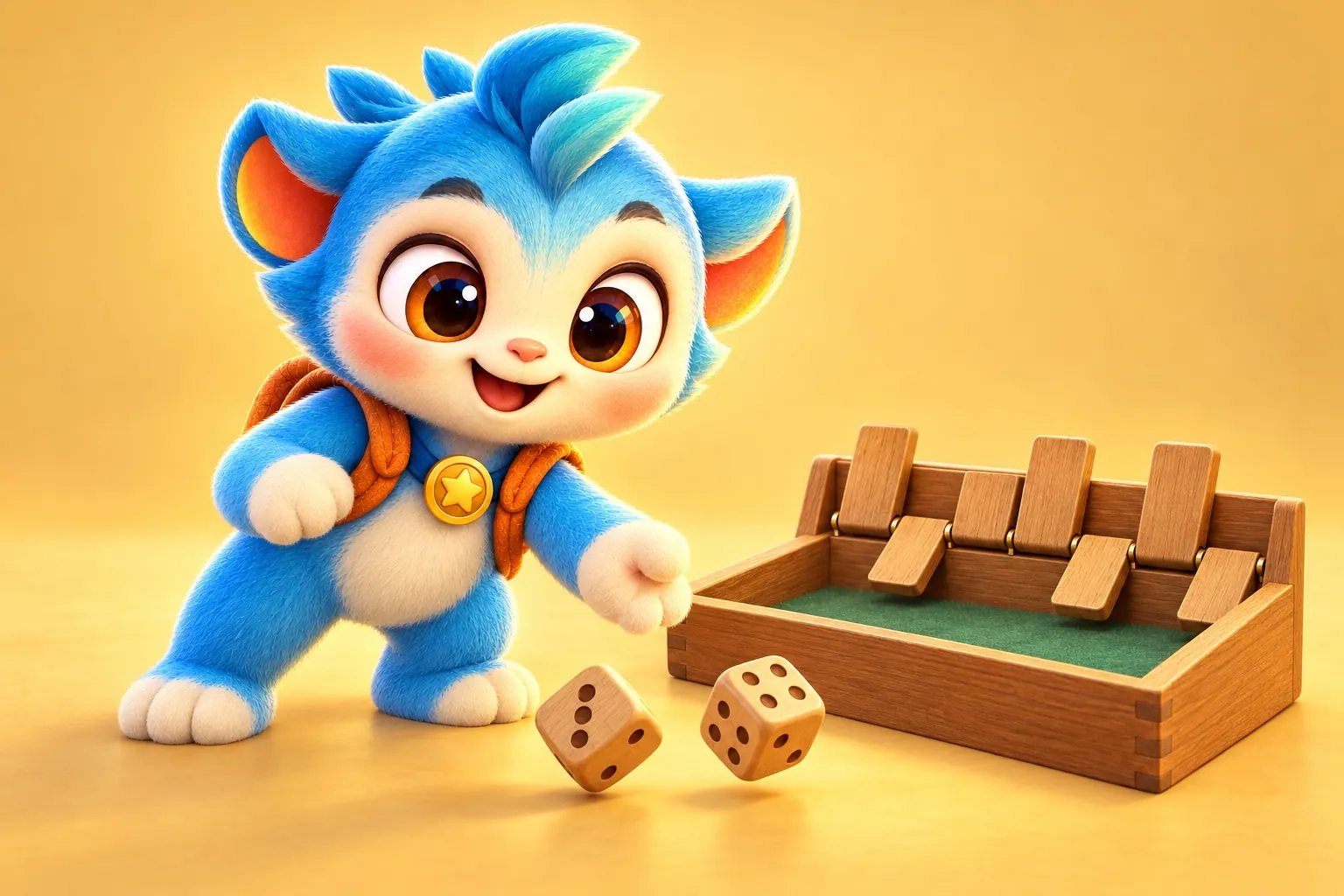
- Shut the Box: roll the dice and close tiles that add up to the roll, often in more than one way.
- Number Bonds: join touching tiles that add up to a target.
For what your child learns at each age, see the Kindergarten and Grade 1 curriculum pages. More free kindergarten math games and first grade math games are on their own pages.
If addition stays very hard after weeks of calm practice, talk to your child’s teacher.
Quick answers
Is it okay for my child to use fingers to add?
Yes. The US kindergarten standards list fingers among the ways to represent addition and subtraction, next to objects, drawings and sounds. Fingers give way to other strategies as facts become familiar.
Should I use timed drills to build fluency?
The standards ask for fluency, which here means answering accurately without a long count. They do not mention timing. Short, relaxed practice with games and strategies is a gentler route, and no timer is needed.
What order should I teach the strategies in?
Try this order: counting all, counting on, doubles, then making ten. Move on when your child uses one strategy easily. Children may mix several, and that is fine.
When should we move from objects to written equations?
Once your child can solve small sums with objects and say what happened in words, write the equation beside the objects. Keep the objects nearby for a while so the symbols keep their meaning.
Related

Sum Rockets
Give each rocket the right fuel number and light up the sky.
- Ages 5–7
- Addition facts to 10 and 20
- Counting on
Shut the Box
Roll the dice, then close tiles that add up to the roll. Can you close them all?
- Ages 5–8
- Addition within 12
- Number bonds

Sources
- Common Core State Standards for Mathematics, Kindergarten: Operations and Algebraic Thinking (K.OA), National Governors Association Center for Best Practices and Council of Chief State School Officers. www.thecorestandards.org
- Common Core State Standards for Mathematics, Grade 1: Operations and Algebraic Thinking (1.OA), National Governors Association Center for Best Practices and Council of Chief State School Officers. www.thecorestandards.org
- Teaching Math to Young Children (practice guide), US Institute of Education Sciences, What Works Clearinghouse. ies.ed.gov
Keep reading
Number bonds to 10: what they are and 7 ways to practice
Number bonds to 10 are the pairs that make 10, like 3 and 7. See what they are, why making ten matters, and seven ways to practice at home.
Fact family in math: what it means and how to teach it at home
A fact family is the set of addition and subtraction facts that use the same three numbers. See fact triangles, examples and how they make subtraction easier.

Greater than less than: how to teach the symbols to kids
Greater than, less than and equal to start with comparing objects. Steps for teaching the > and < symbols, and what the alligator trick can and can't do.