

Number Path
Help Mathumo cross the stones by stepping on the numbers in order.
- Ages 4–6
- Number order to 20
- Reading numerals
Sum Rockets is one of our free addition games for ages 5 to 7. Solve each rocket’s sum to launch it, and launch ten to light up the sky.
Pick the fuel number that makes the sum.
Solve each rocket’s sum to launch it, and launch ten to light up the sky.
After two tries on a sum, a ten-frame of dots appears so you can count the sum out and see the answer.
Ideas for playing and talking about math away from the screen, related to Sum Rockets.
How to teach addition to kids in order: counting all, counting on, doubles, making ten, then fluency through play instead of timed drills.
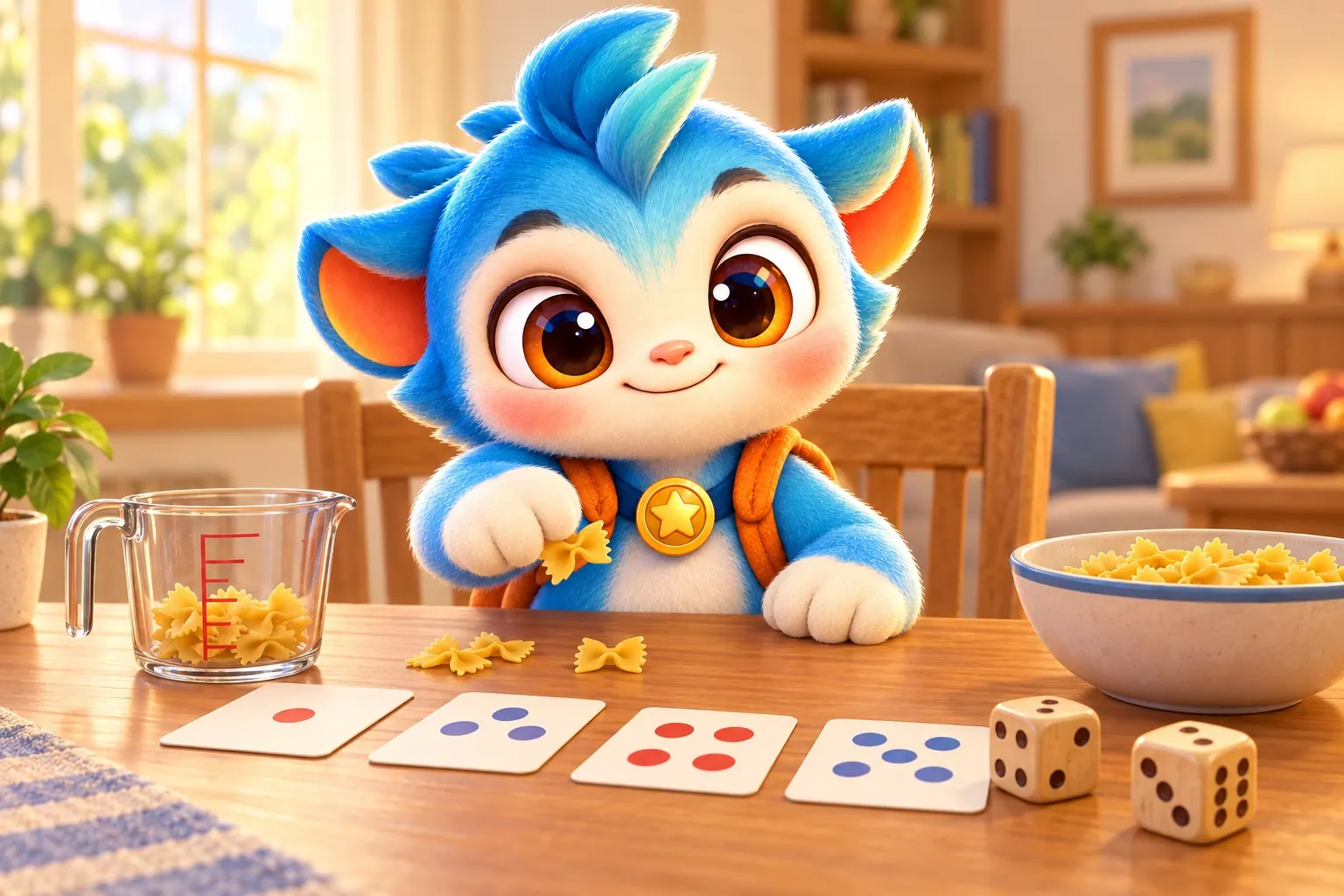
Twelve math games for kids at home using cards, dice, the kitchen and a walk. No worksheets, no special supplies, plus free online games to try.
Help Mathumo cross the stones by stepping on the numbers in order.
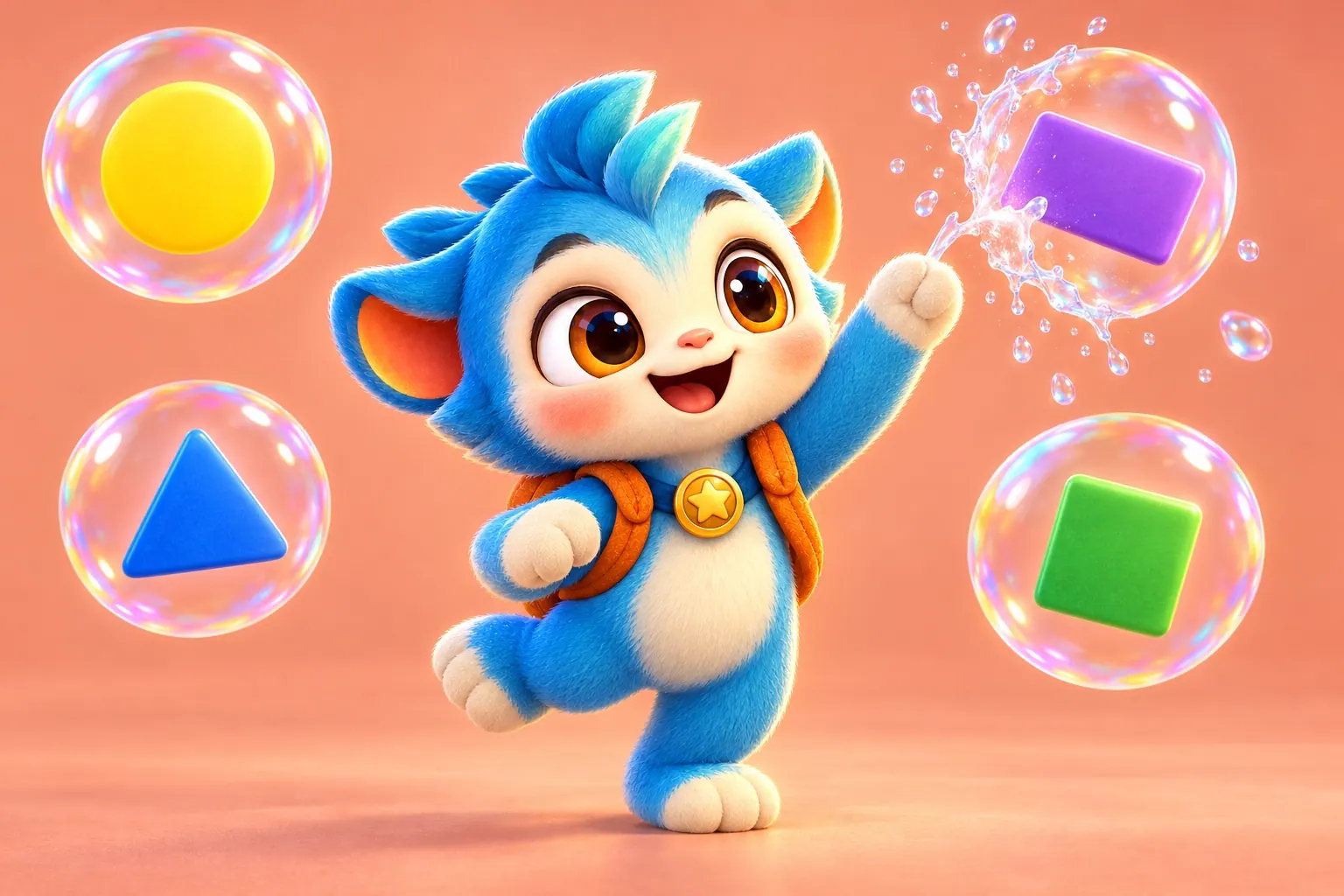
Pop the bubbles that hold the shape Mathumo asks for.
Good addition games for kindergarten start with small sums within 10, use pictures or objects as well as numbers, and let children try again without pressure. Sum Rockets suits ages 5 to 7: start with Within 10, then move to Within 20 and Doubles. Dice and card games at home help too.
Start with the numbers they already know. Within 10, count on from the bigger number: for 3 + 6 say “6… 7, 8, 9”. Past 10, use make ten: 8 + 5 is 8 + 2 + 3, which is 10 + 3. A ten-frame helps children see why it works. Short, relaxed practice a few times a week is enough.
Counting on means starting from one number and counting up by the other, instead of counting everything from 1. For 4 + 3, say “4… 5, 6, 7”. It saves counting every object from 1, and it is easiest to start from the bigger number.
Make ten means filling up to 10 first, then adding what is left. For 8 + 5, take 2 from the 5 to make 8 + 2 = 10, then add the other 3 to get 13. It uses the fact that 10 is an easy number to add to.
A double is a number added to itself, such as 6 + 6 = 12. A near double is one more or less, such as 6 + 7: it is double 6, plus 1, which makes 13. Doubles are often the first sums children know by heart, so they make good stepping stones.