
Teaching math
How to teach a child to count: 6 steps for ages 3 to 5
In this guide
- Why is counting more than saying the numbers?
- 1. How do we practice saying the numbers?
- 2. How do I teach one touch for each number?
- 3. What does “how many?” ask?
- 4. What can we count when nothing sits in a line?
- 5. When do numerals come in?
- 6. Which games help with counting?
- What comes after counting?
- Quick answers
How to teach counting: go in small steps. First say the numbers in order, then touch one object for each number, then learn that the last number said tells how many. Practice with real things for a few minutes a day, and connect the count to written numerals last.
Why is counting more than saying the numbers?
Reciting “1, 2, 3, 4, 5” is a song at first. Counting a group asks for more. A child has to give each object one number and only one, and has to know that the final number names the whole group. The US Common Core kindergarten standards describe it this way: say the number names in order, “pairing each object with one and only one number name and each number name with one and only one object.” They add that “the last number name said tells the number of objects counted.”
Each of these can be practiced on its own, so the steps below take them one at a time. The IES practice guide on teaching math to young children recommends teaching number “using a developmental progression,” which it describes as a sequence of skills where each one prepares the next. In its sequence, counting comes before comparing groups and labeling them with numerals.
1. How do we practice saying the numbers?
Count out loud while you climb stairs, set the table or wait in line. Say the numbers with your child, slowly, and stop at 5 or 10 at first. Do not worry about objects yet. The order of the words has to be learned by heart, so say it often, in short bursts on different days.
When the order is steady, try starting in the middle: “Start at 4. What comes next?” The kindergarten standards list this too, as counting forward from a given number instead of always beginning at 1.
A quick check: ask your child to count to 10 while you listen. If a number is skipped or swapped, say the line together a few more times before adding objects. Number songs and finger rhymes help here. The IES guide suggests reciting or singing the numbers, first from one to ten and only later past ten.
2. How do I teach one touch for each number?
Put 4 or 5 spoons in a row. Touch the first spoon and say “one.” Touch the next and say “two.” Let your child copy you, with their finger on each object as they say its number.
A child may say the numbers faster than they touch, or touch twice for one word. Slow down and move each spoon into a new pile as you count it, a fix the IES guide also suggests for losing track. Moved objects cannot be counted twice, and you can see which are left.
- Start with 3 objects, then 4, then 5.
- Count together, hand over hand if it helps.
- Let your child count alone while you watch.
- Mix up the objects: spoons, blocks, socks, grapes. Cut grapes into quarters lengthwise for young children, and stay close while they handle small things.
Take turns being the counter, and let your child catch you when you skip an object. Spotting a mistake is good practice too.
3. What does “how many?” ask?
After each count, ask: “So how many spoons are there?” A child who starts again from one has not yet connected the last number to the total. The IES guide notes that children typically learn to count one by one before they see that the count tells how many, and that some simply count again when asked. Count together once more, say the last word a little louder, and answer yourself: “Five. There are five spoons.”
Then try the surprise test. Push the spoons into a bunch, or spread them out, and ask again. The standards say that “the number of objects is the same regardless of their arrangement or the order in which they were counted.” A child who has grasped that will count the bunch and get 5 again, or will tell you it is still 5.
Try a counting hunt as well. Ask for “three red things” or “five things that are round,” and let your child fetch them and count them out, touching each one once.
4. What can we count when nothing sits in a line?
Count things that cannot be moved into a pile: claps, jumps, bounces of a ball, the stairs. With nothing to move, your child must keep track in their head or on their fingers. The IES guide suggests counting sounds and actions like these, such as claps or hops.
Scattered groups are the other hard case. The kindergarten standards set a lower number for them: up to 20 things in a line, array or circle, but up to 10 in a scattered group. Build up the same way at home. Start with a line of 5, then a line of 10, then a scattered group of 5.
Daily routines give plenty of chances. Count the steps to the front door, the forks for dinner, the cars you pass in a minute of waiting. Aim for two or three quick counts a day. Pick a different object each time, so your child learns that counting works for anything: toys, fruit, people, sounds.
5. When do numerals come in?
When your child counts 5 objects correctly and says “five” as the total, set a card with the numeral 5 beside the group. Say it as you point: “This is the number five. It tells how many.” Keep the objects next to the card, and begin with the numerals 1 to 5 before going on to 10.
Then turn it around. Ask for a number of objects: “Can you give me 4 grapes?” The standards include this: “given a number from 1-20, count out that many objects.” Now your child starts from the number and builds the group, which is a different job from counting a group that is already there.
6. Which games help with counting?
Two free games on this site match steps 2 to 5:
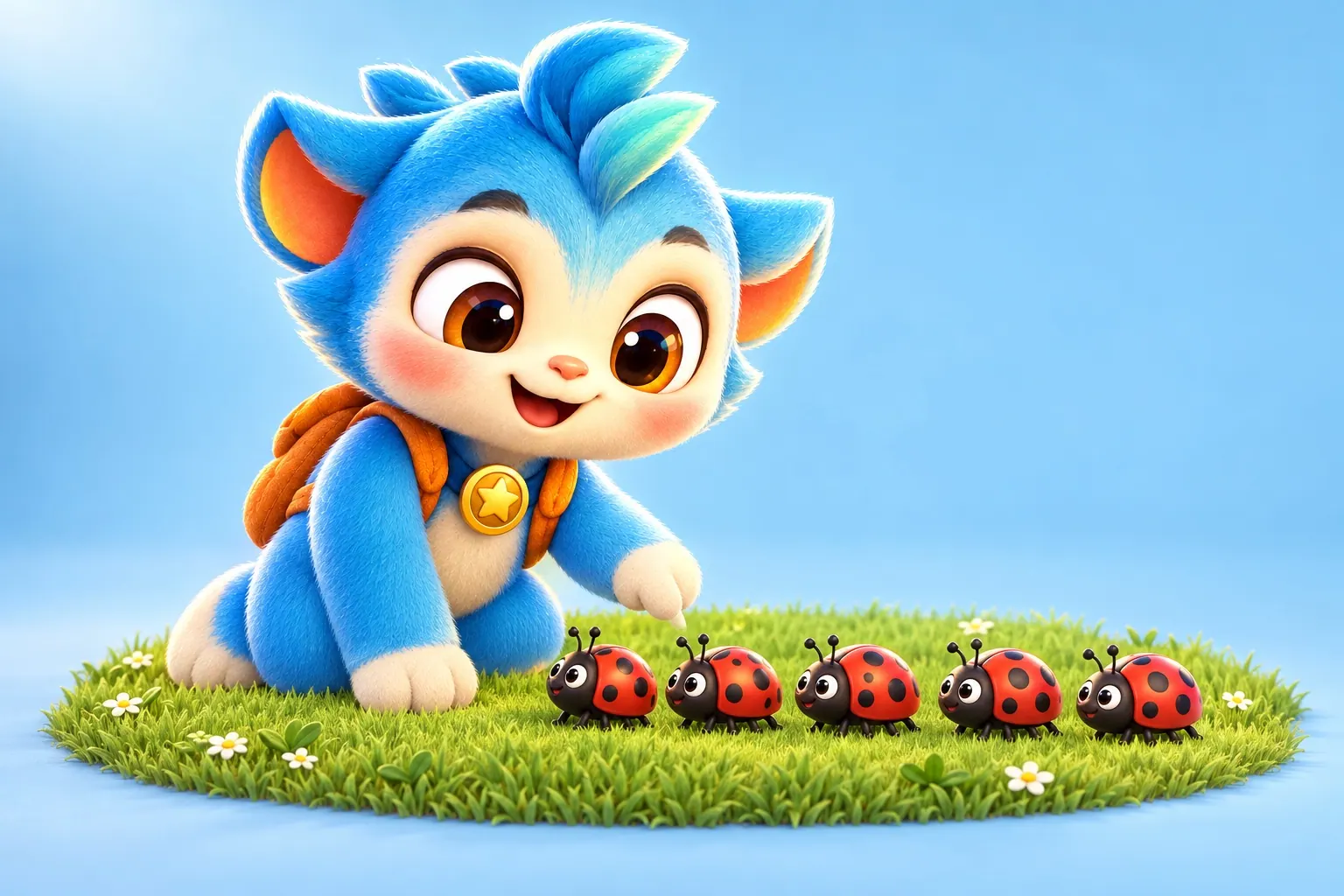
- Count and Tap: tap each bug once to count it, then pick how many there are. It practices one touch for each number, from small groups up to 20.
- Number Path: step on the stones in number order, which builds numeral reading and order to 20.
Sit with your child and ask “How many?” out loud, as you would with spoons. The Preschool curriculum page lists the counting topics in order, from counting to 5 up to counting to 10. More free preschool math games are on their own page.
What comes after counting?
Once a child can count a small group and say the total, the next steps are comparing groups, “one more,” and putting two groups together. Our guide to number bonds to 10 covers splitting numbers, and how to teach addition starts from the same counting skills.
Children learn to count at different speeds, and a few calm minutes a day with real objects is a good place to start. If you are worried about your child’s progress, talk to their teacher or doctor.
Quick answers
Why does my child count to 10 but get 'how many?' wrong?
Saying the number words in order and counting a group are two skills. The second needs one number for each object and the idea that the last number said tells the total. Practice 'How many?' after every count, using 3 to 5 objects.
How far should my child count before kindergarten?
The US Common Core kindergarten standards ask for counting to 100 by ones and tens, and for counting up to 20 objects in a line or 10 scattered. Those are goals for the kindergarten year itself, so a younger child is not behind for stopping sooner.
When should I introduce written numerals?
Once your child counts a small group correctly and says how many, put a numeral card beside the group. Start with 1 to 5 and keep the objects there so the numeral stays tied to a quantity.
My child recounts from one when I ask 'how many?'. Is that a problem?
Usually not. Children typically learn to count one by one before they see that the last number tells how many, and some count again when asked. Count together, say the last number a little louder, then ask again. Try again on another day with a different group.
Related
Count and Tap
Tap each bug once to count it, then say how many.
- Ages 3–6
- Counting to 20
- One-to-one counting

Number Path
Help Mathumo cross the stones by stepping on the numbers in order.
- Ages 4–6
- Number order to 20
- Reading numerals
Sources
- Common Core State Standards for Mathematics, Kindergarten: Counting and Cardinality (K.CC), National Governors Association Center for Best Practices and Council of Chief State School Officers. www.thecorestandards.org
- Teaching Math to Young Children (practice guide), US Institute of Education Sciences, What Works Clearinghouse. ies.ed.gov
Keep reading
One to one correspondence: what it is and how to teach it
One to one correspondence means one number word for each object you count. See how it develops, activities for home, and the signs that it is clicking.

Greater than less than: how to teach the symbols to kids
Greater than, less than and equal to start with comparing objects. Steps for teaching the > and < symbols, and what the alligator trick can and can't do.
Subitizing: how to help kids see how many at a glance
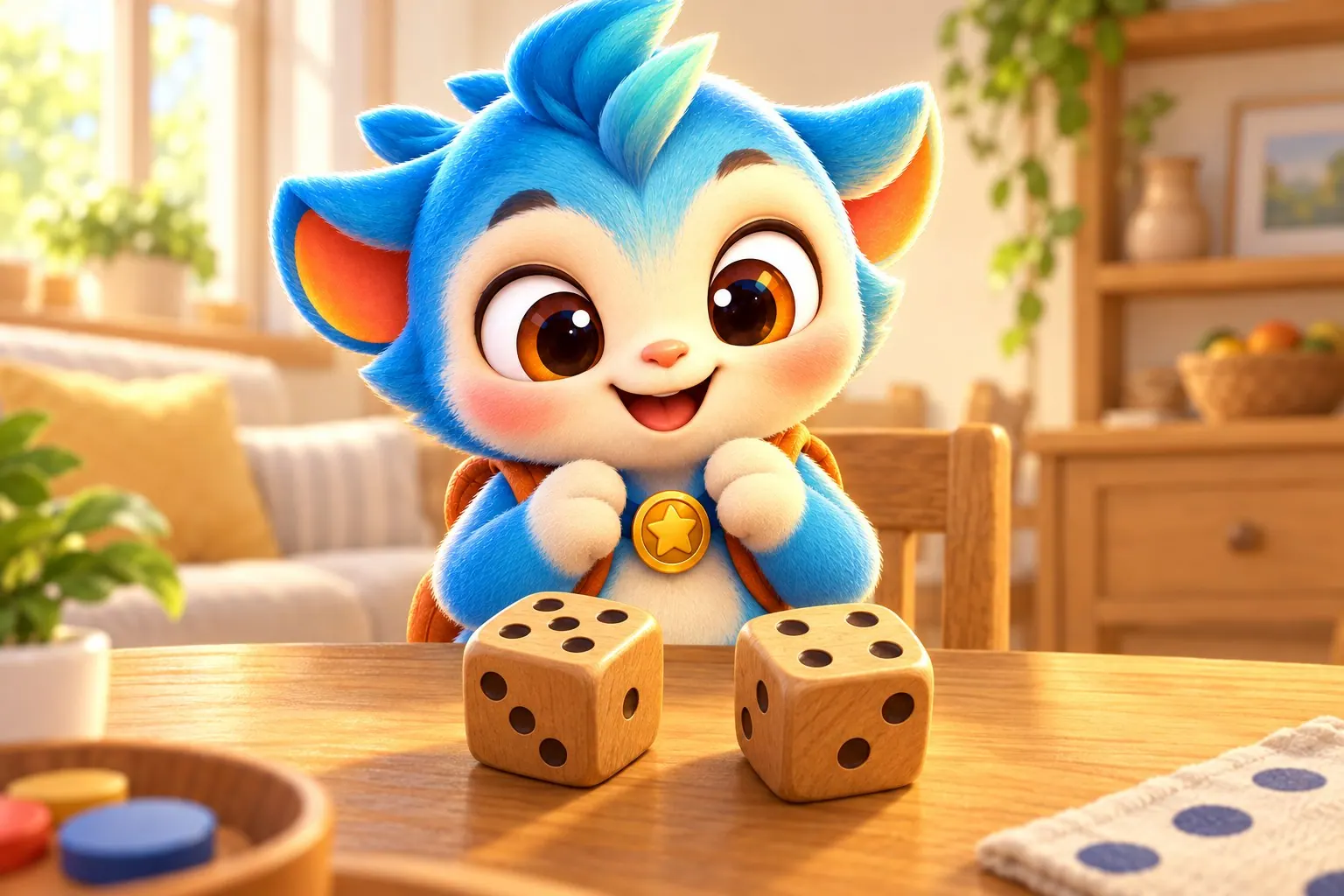
Subitizing means seeing how many without counting. Learn the two kinds, why dice and dot patterns work, and how to practice with fingers and ten frames.