
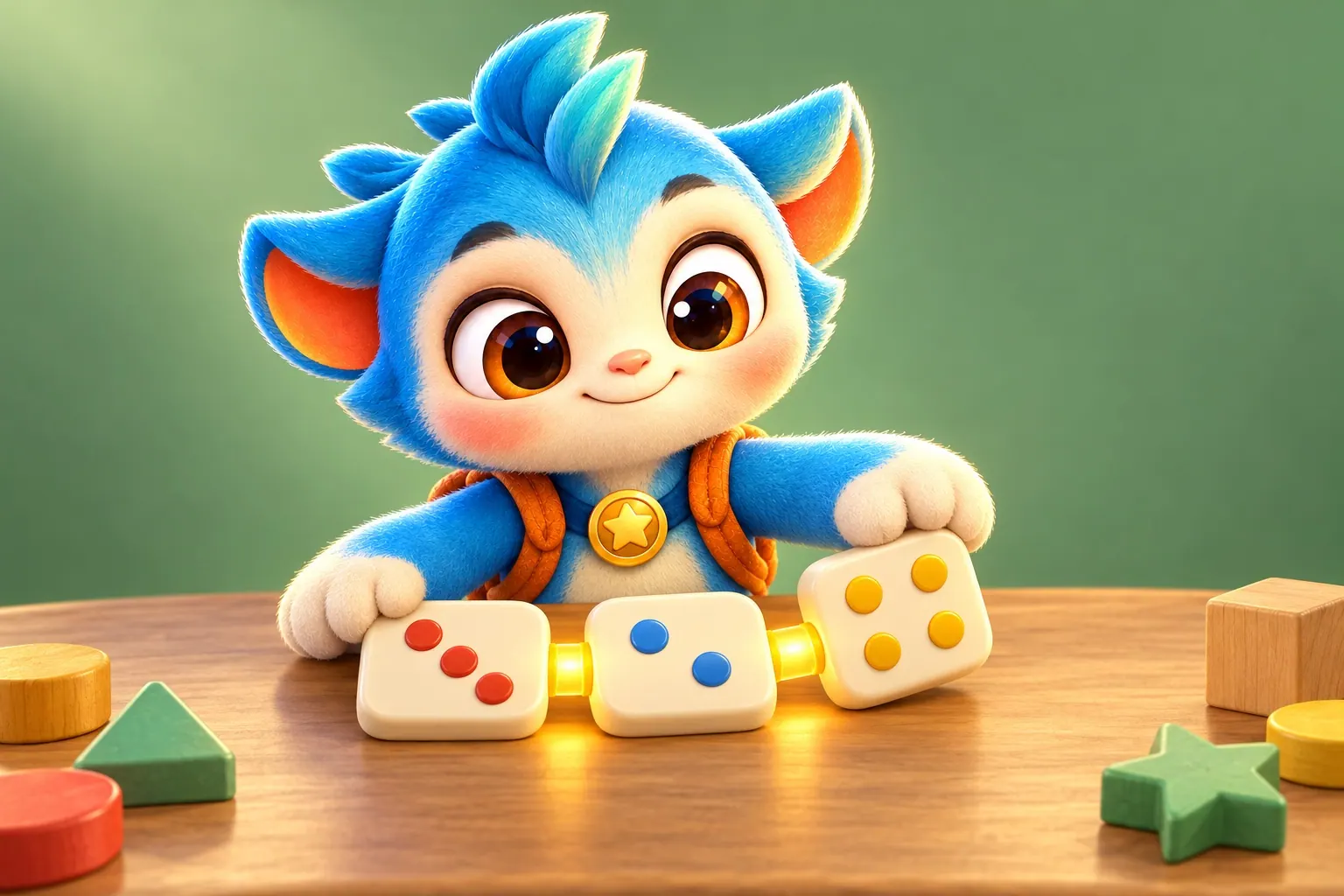
Equal Groups
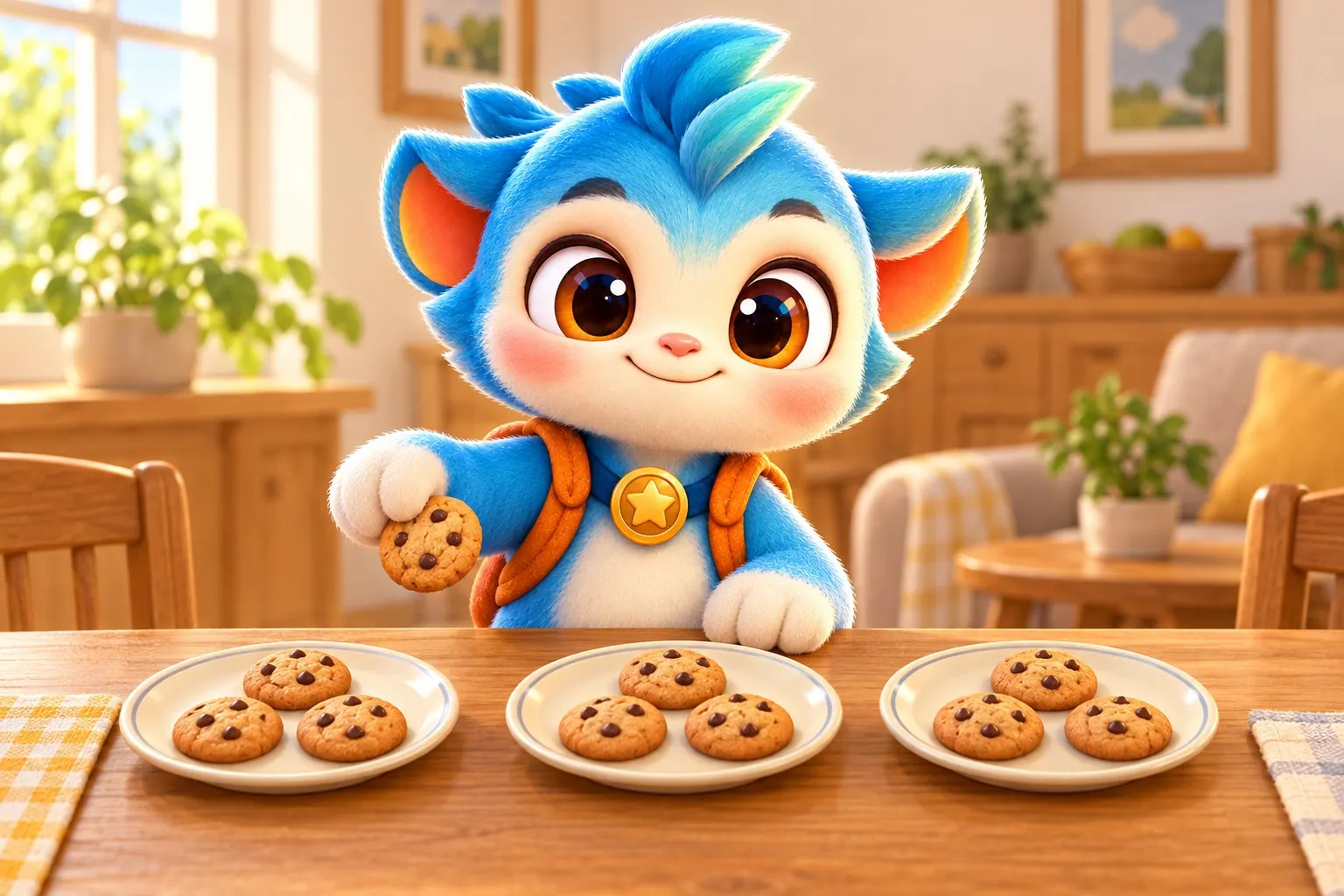
Equal groups multiplication starts with sharing: put the same number of cookies on every plate, then count. 3 plates of 4 is 12. Free for ages 6 to 8.
How to play
3 plates of 4 is 12. Free for ages 6 to 8.
- Pick a mode for equal groups multiplication: Share (divide), Groups (multiply) or Arrays (rows and columns).
- In Share, tap a plate to put a cookie on it, or press Deal one each to give every plate one. Every plate must end up with the same.
- In Groups, tap each plate until it has the number asked for, like 4 plates of 3.
- In Arrays, tap squares to place cookies in the rows and columns asked for, like 3 rows of 5.
- Then pick how many: on each plate, or in all. Eight rounds make a game.
Stuck? After two tries, or when you press Show a hint, the game highlights the next step. It never builds the answer for you.
What children learn
- Equal sharing: dividing a number of things so every group gets the same.
- Equal groups: seeing 4 groups of 3 as 3 + 3 + 3 + 3 and as 12.
- Arrays: rows and columns as a picture of multiplication, 3 × 5 = 15.
Guides for parents
Ideas for playing and talking about math away from the screen, related to Equal Groups.
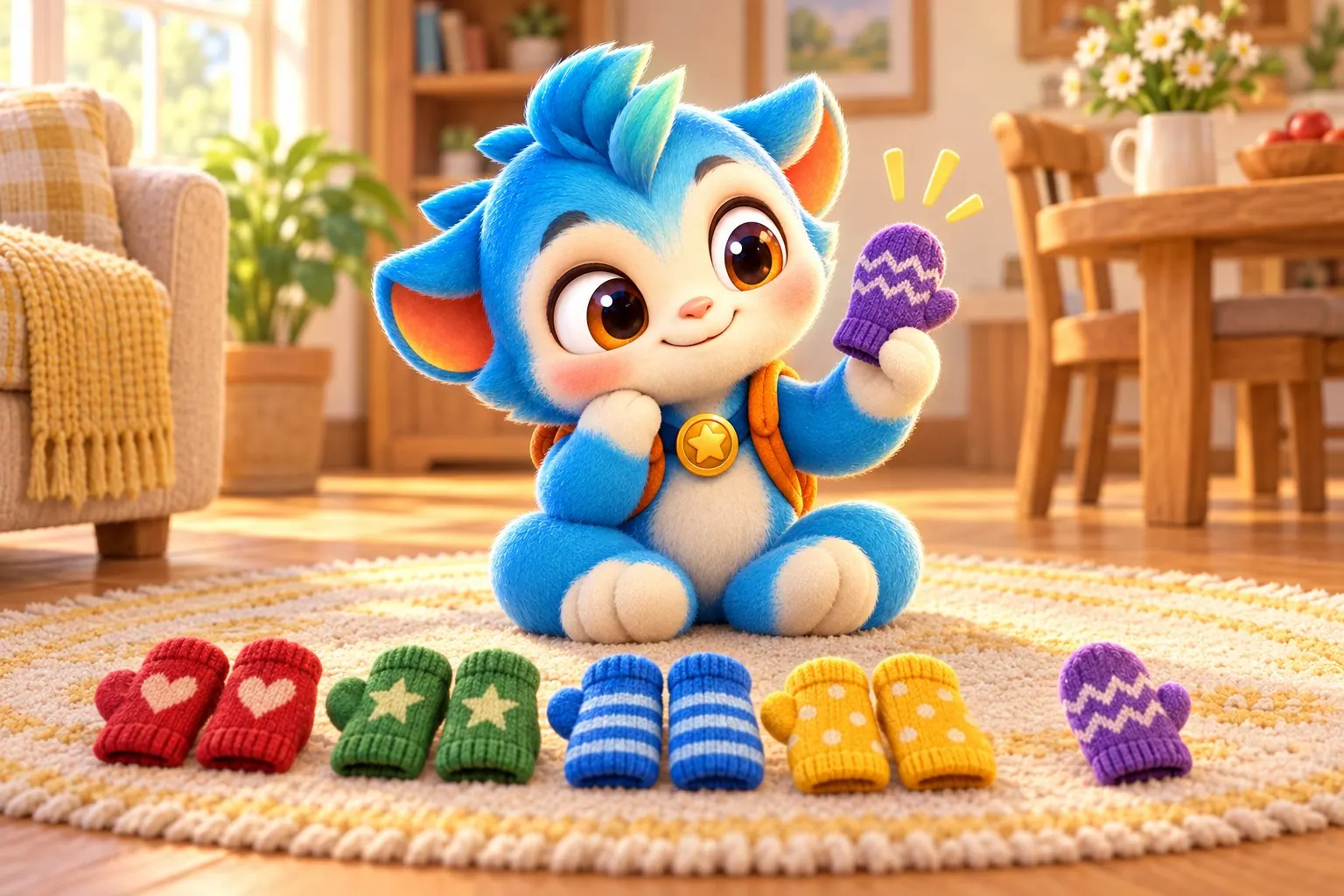
Even and odd numbers: the pairing trick for kids
A number is even if objects split into pairs with none left over. Teach even and odd numbers with pairs first, then skip counting and the last-digit rule.
How to teach multiplication: groups, arrays, then facts
How to teach multiplication in a sensible order: equal groups, repeated addition, skip counting and arrays first, then the facts for 2, 5 and 10.

Skip counting by 2s, 5s and 10s: a parent's guide with a chart
Skip counting means counting in equal jumps. Learn how to teach counting by 10s, 5s and 2s, how to use a hundred chart, and how it leads to multiplication.
More games
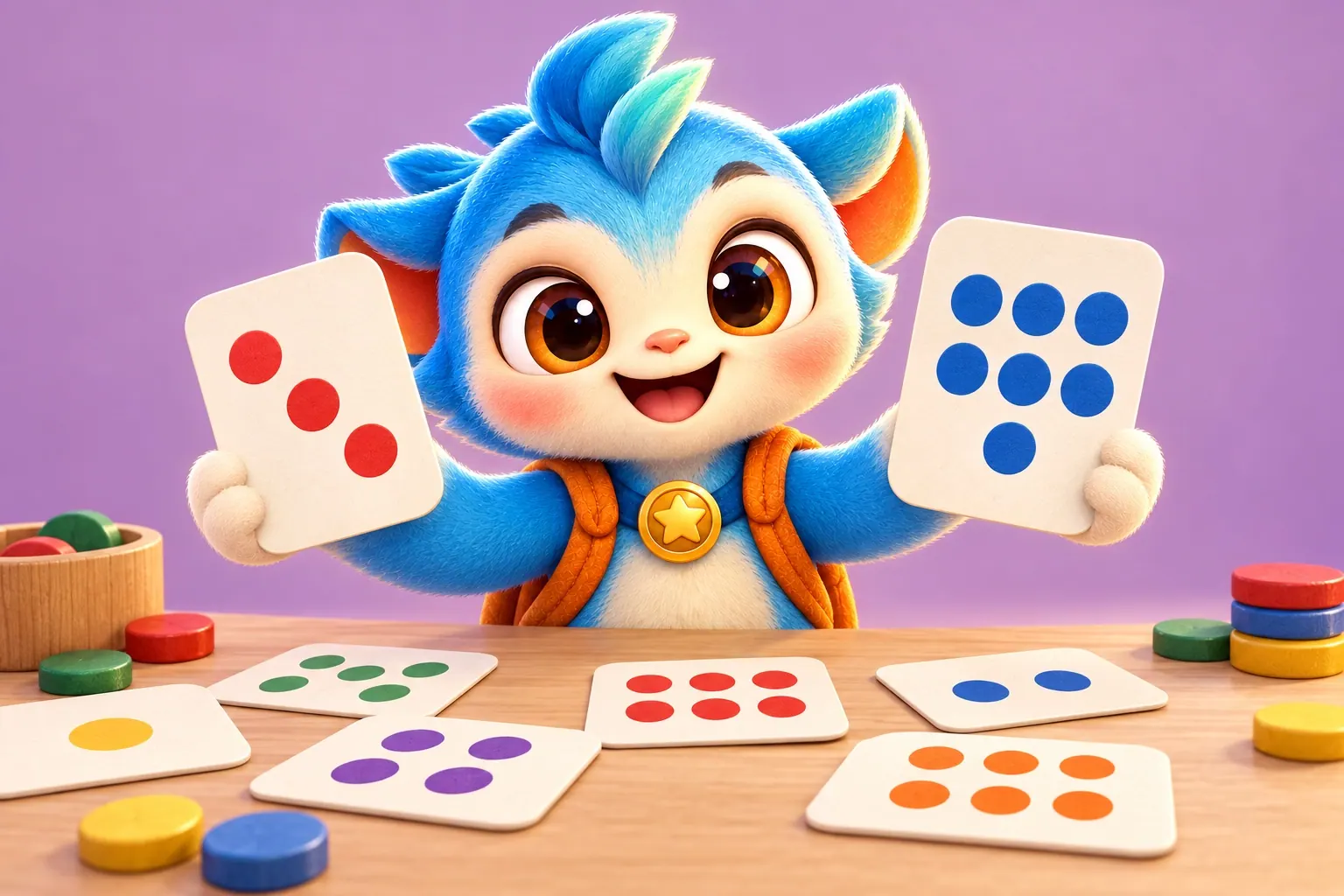
Make Ten Match
Find two cards that add up to 10 and match them.
- Ages 5–7
- Pairs that make 10
- Bonds to 5 and 20

Sum Rockets
Give each rocket the right fuel number and light up the sky.
- Ages 5–7
- Addition facts to 10 and 20
- Counting on
Questions about Equal Groups
What is equal groups multiplication?
Equal groups multiplication means finding the total when every group holds the same number, such as 4 plates with 3 cookies each: 4 × 3 = 12. Children meet it first as sharing and counting groups, then as arrays in rows and columns. Equal Groups lets them build the groups before they see the number sentence.
How do you explain multiplication to a 7-year-old?
Multiplication is a shortcut for adding the same number again and again. Four plates with 3 cookies each is 3 + 3 + 3 + 3 = 12, which we write as 4 × 3 = 12 and read as “4 groups of 3.” Children understand it best with real objects first: plates, rows of counters, egg cartons. Equal Groups lets them build the groups before they see the number sentence.
What is an array in math?
An array is objects arranged in equal rows and equal columns, like muffins in a tray. A 3 by 5 array has 3 rows of 5, so 15 in all. Arrays show that multiplication works in any order: 3 rows of 5 and 5 rows of 3 both make 15.
What is the connection between sharing and dividing?
Dividing is sharing a number of things into equal groups. If 12 cookies are shared onto 3 plates, each plate gets 4, and 3 groups of 4 make 12 again. That is why multiplication and division are taught together.
When do children learn multiplication?
In the US, Common Core introduces equal groups and arrays in Grade 2 and multiplication facts in Grade 3. In England, children work with equal groups, sharing and the 2, 5 and 10 times tables in Key Stage 1 (ages 5 to 7). This game is made for ages 6 to 8.