
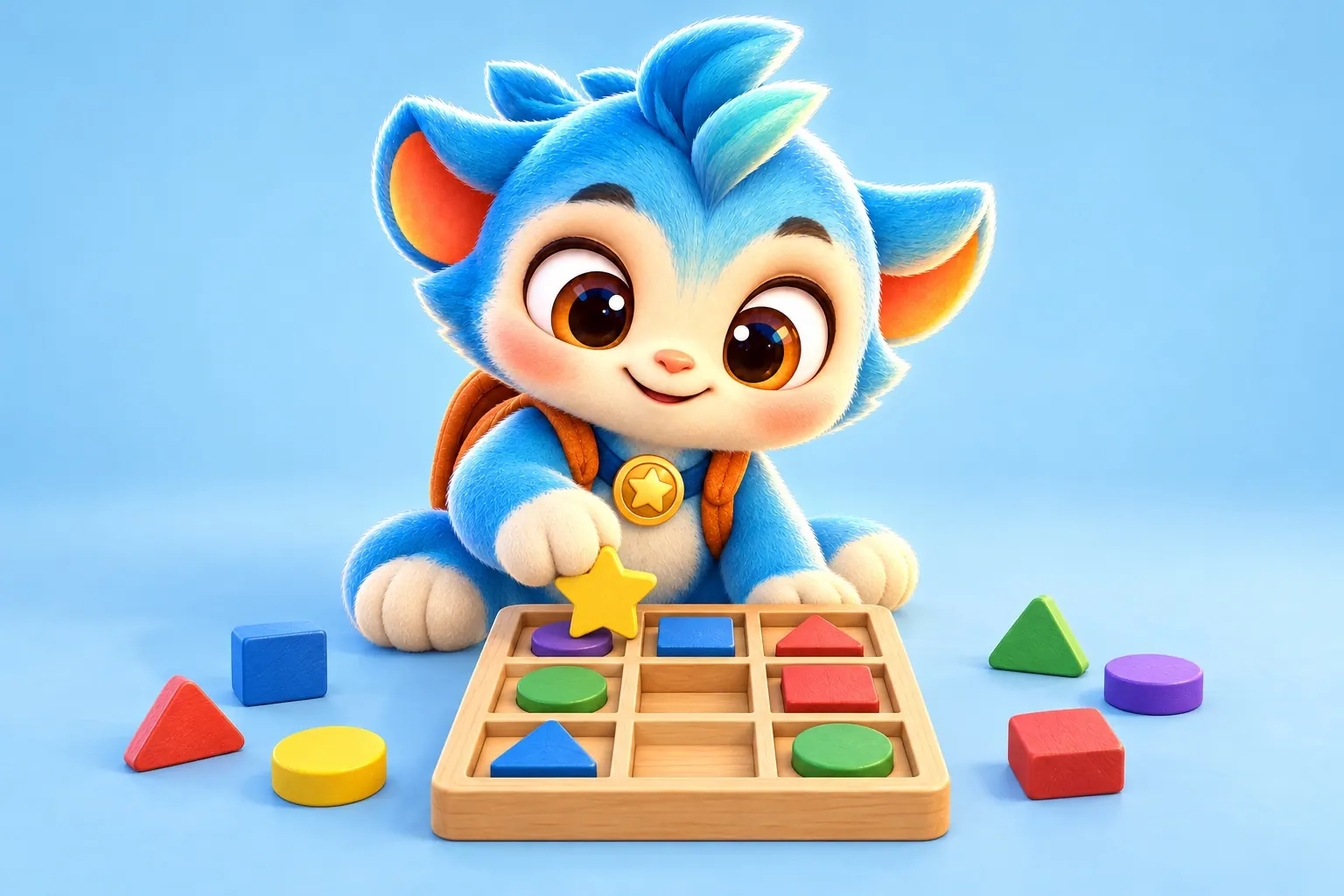
Sudoku for Kids
Shape and number puzzles with one answer each.
- Ages 4–8
- Logical thinking
- Shapes and numbers 1 to 6
How to play checkers: move diagonally, jump over a piece to take it, and reach the far side to crown a king. Start on the mini 6×6 board, then try the classic. Free for ages 6 to 8.
Your turn. Tap one of your blue pieces.
Start on the mini 6×6 board, then try the classic. Free for ages 6 to 8.
Tip: if you can jump, you have to. Look for the glowing pieces. Not sure what to do? Tap a piece and the green dots show every place it can go.
Checkers is a game for two players on the dark squares of a square board. Each turn you move one piece diagonally forward or jump over an opponent’s piece to take it. You win when the other player has no pieces left or cannot move. In the UK the game is called draughts.
On the classic 8×8 board each player has 12 pieces on the dark squares of their three nearest rows. The mini 6×6 board is a smaller version for learning: 6 pieces each, on the two nearest rows. The rows in the middle start empty, and the rules are the same on both boards.
A normal piece, called a man, moves one square diagonally forward onto an empty dark square. It never moves backward.
If an opponent’s piece is diagonally next to yours and the square just past it is empty, you can jump over it and take it off the board. Jumps are compulsory: if you can jump, you have to, and if you have a choice of jumps, you pick which one. If your piece can jump again from where it lands, it keeps going in the same turn, one jump at a time.
A piece that reaches the far row becomes a king and wears a crown. A king moves and jumps one square diagonally in any direction, forward or backward. Becoming a king ends your turn.
You win when the other player has no pieces, or has pieces but no legal move. The game is a draw if the same position happens three times, or if 40 turns pass with no jump and no new king.
Shape and number puzzles with one answer each.
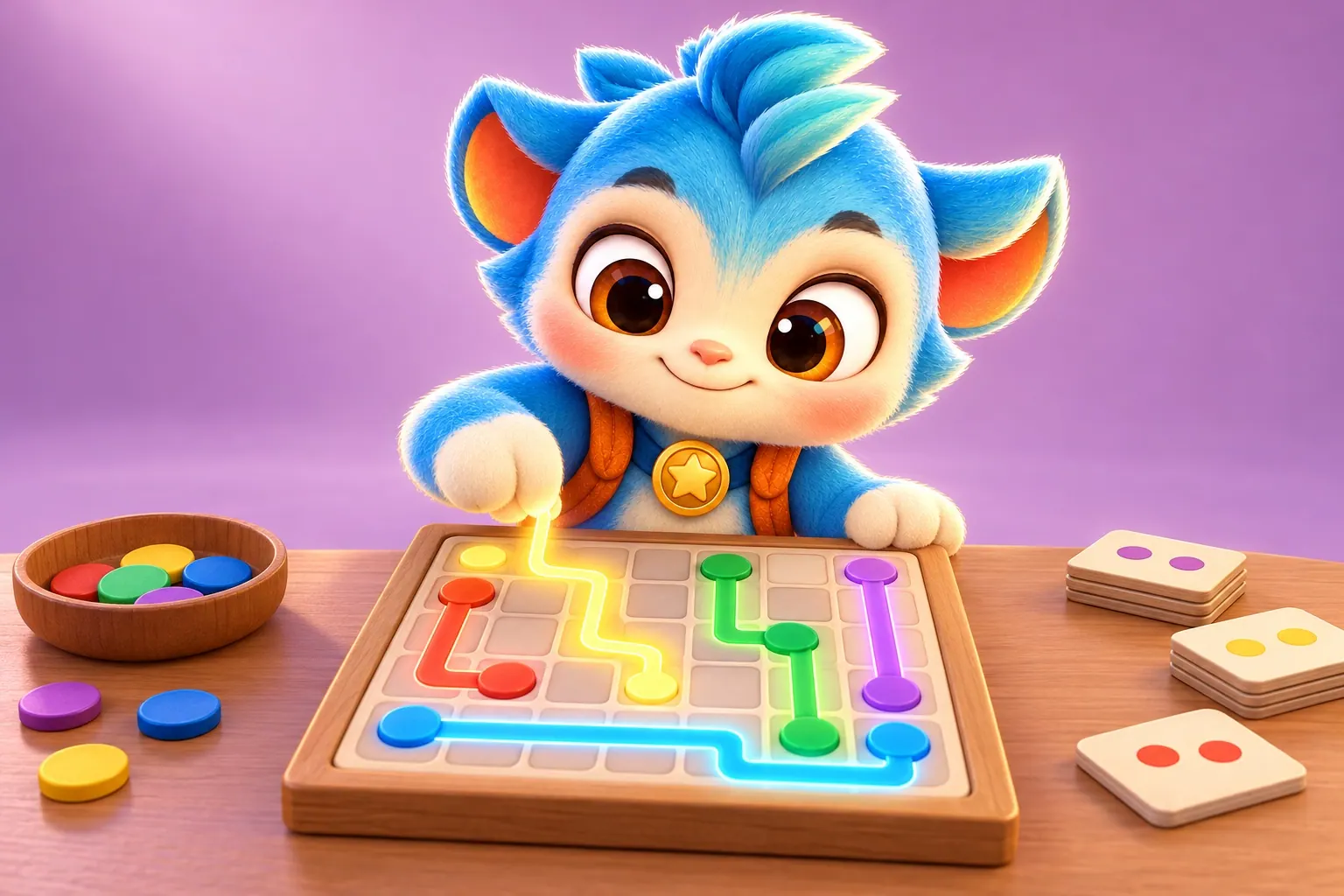
Join each pair of matching numbers with paths that never cross.
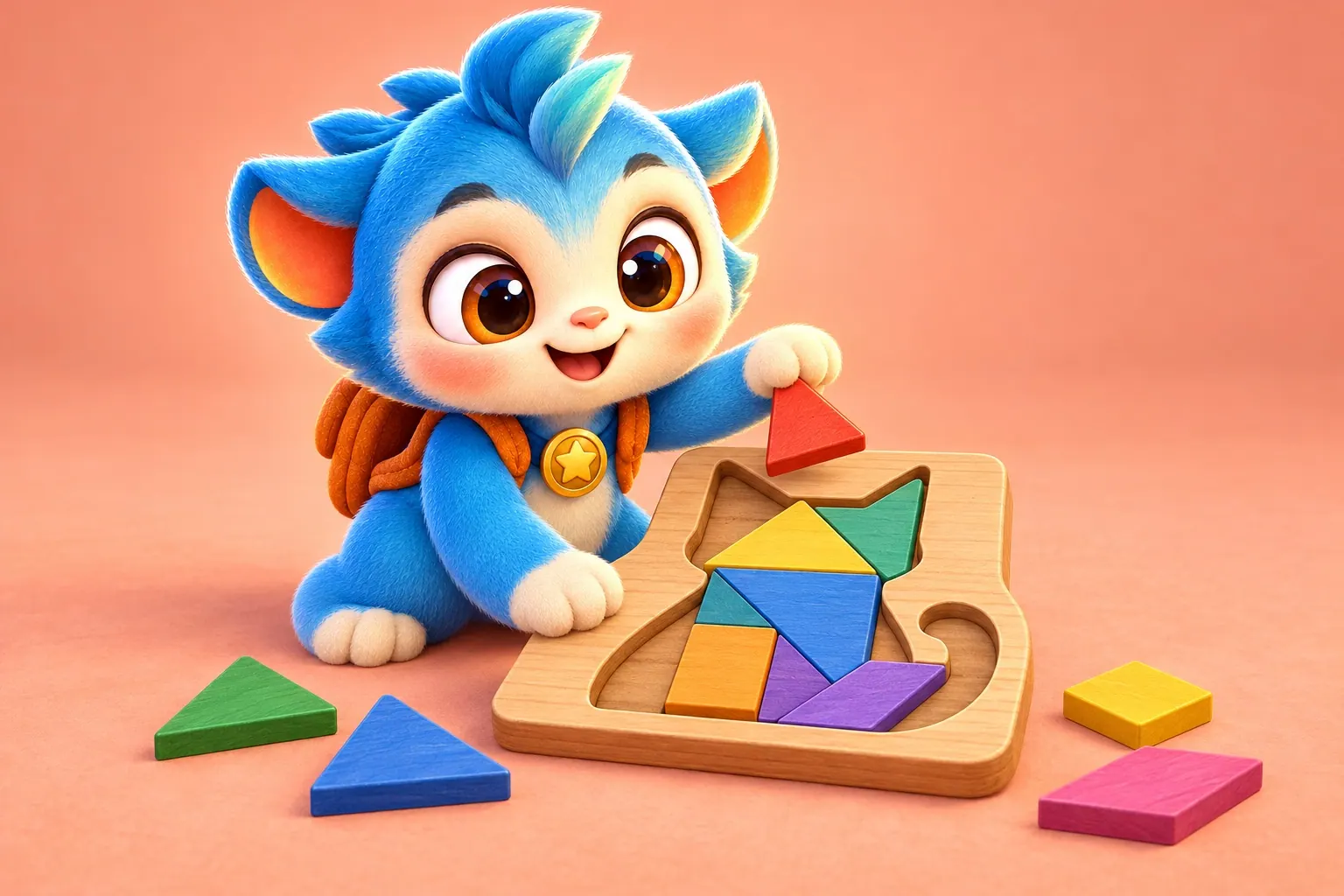
Fill each picture with shapes: turn them, flip them, make them fit.
Each player has pieces on the dark squares. Players take turns moving a piece one square diagonally forward. If a piece is next to an opponent’s piece with an empty square just past it, you can jump over it and take it, and you must jump when you can. A piece that reaches the far side becomes a king and can move backward too. You win by taking all the opponent’s pieces or leaving them with no move.
Yes. In standard checkers a jump is compulsory: if you can jump, you must. If more than one jump is possible, you choose which one. This game highlights the pieces that can jump so children see why a move is not allowed.
The mini board is 6 by 6 with 6 pieces each, so games are shorter and there is less to keep track of. The classic board is the standard 8 by 8 with 12 pieces each. The rules are the same on both.
Many children can learn the moves at about age 6, and the mini board is a gentler start. Jumping and the “you have to jump” rule take practice, so playing against the Friendly setting first works well.
English or American checkers: men move and jump forward only, kings move and jump one square in any direction, jumps are compulsory and a chain of jumps continues, and a piece that becomes a king ends its turn. There is no flying king. For this game, a draw is declared when the same position happens three times or after 40 turns with no jump or new king.